
When consulting with steel mills about billet heating equipment, customers are usually not most concerned about the equipment’s appearance, but rather its actual power consumption, on-site installation conditions, incoming material status, and impact on the power grid. Especially when preparing to add a new production line or replace a gas-fired furnace, the suitability of the billet heating equipment for existing workshop conditions often determines the smooth progress of the project.
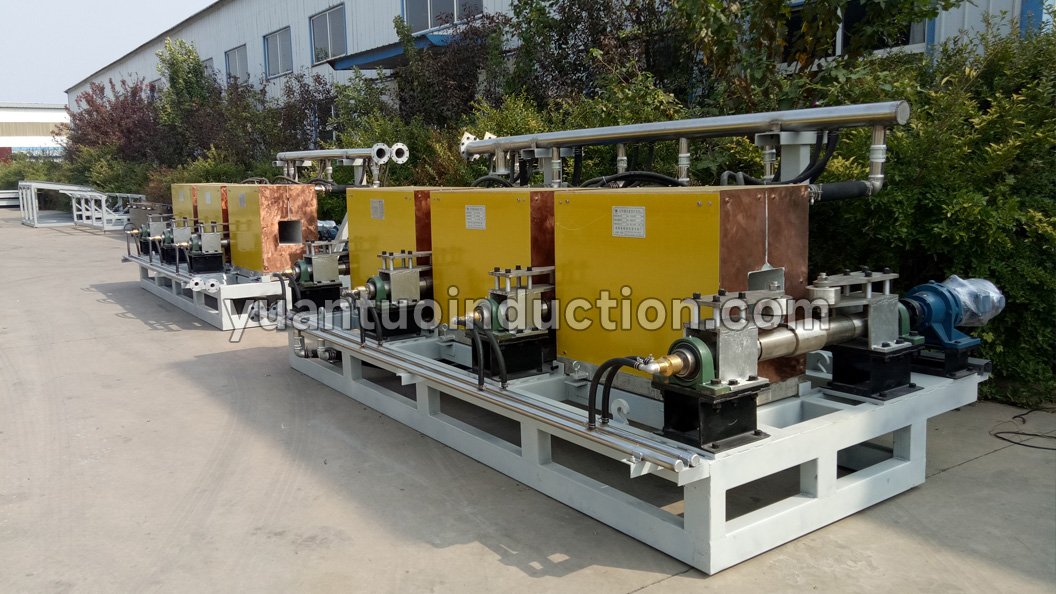
First, let’s discuss power consumption. The actual energy consumption of billet heating equipment cannot be judged solely by the installed power; it must be comprehensively assessed considering billet specifications, furnace inlet temperature, target furnace outlet temperature, production cycle, and the heating difference. For the same billet heating system, if the incoming material temperature is stable and the heating range is reasonable, the actual power consumption per ton will be significantly lower than many customers intuitively imagine. Whether the transformer can supply sufficient power is not simply determined by the equipment’s power capacity, but requires a comprehensive evaluation considering the on-site power supply capacity, simultaneous operating load, power factor, and power distribution scheme. Reputable induction heating projects conduct power condition calculations in the early stages to avoid discovering power supply mismatches only after the equipment arrives at the factory.
Next, let’s discuss installation space and the issue of replacing gas-fired furnaces. Billet reheating equipment uses induction heating. Its overall layout can usually be customized based on the on-site logistics direction, loading and unloading methods, and preceding and following processes. Many projects can be optimized around the existing gas furnace location. However, whether it can be directly replaced depends on the existing foundation, conveyor height, inlet and outlet directions, cycle time, and on-site access conditions; it cannot be simply understood as “moving the equipment there.” A mature approach is to first conduct a layout assessment based on the site dimensions and process rhythm, and then determine whether in-situ replacement or partial modification is suitable.
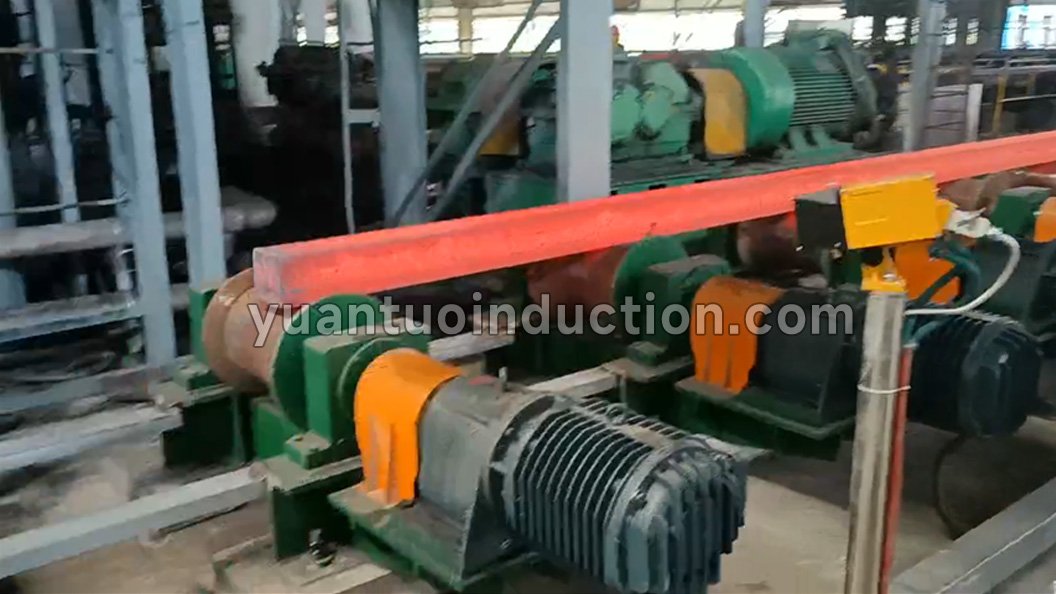
For cases where the billet’s curvature before entering the furnace exceeds 3mm/m, prior assessment is also necessary. Excessive billet curvature can easily affect conveying stability, feeding alignment, and the passage status within the inductor, and in severe cases, it can also affect coupling effect and heating uniformity. Whether it can be used depends not only on a single number, but also on the billet length, cross-sectional dimensions, conveying method, and guide design. Some projects can solve this through guide optimization or front-end correction, while others require controlling the straightness of the incoming material to avoid subsequent operational instability.
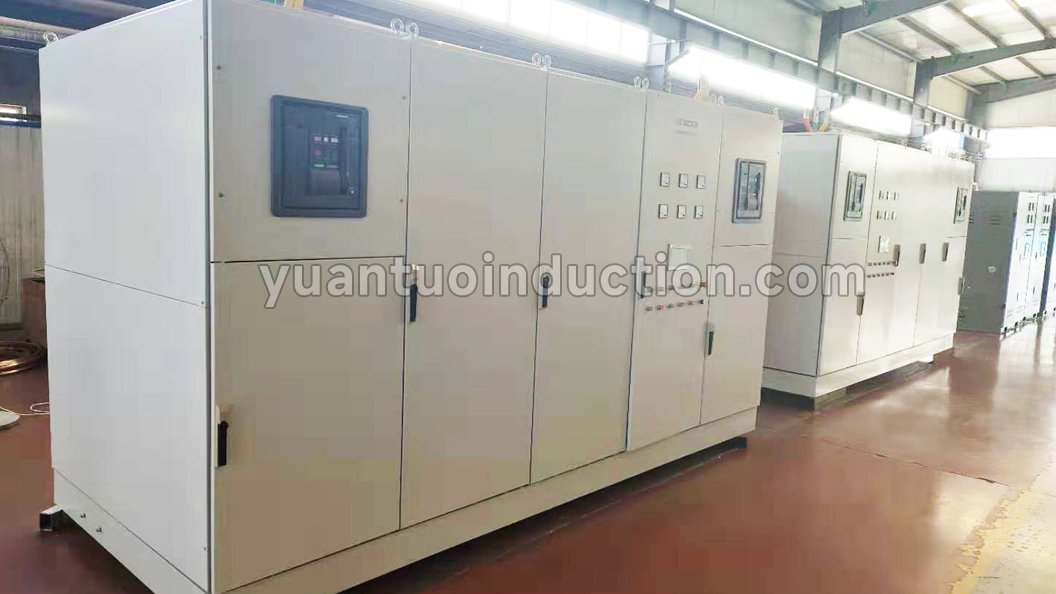
Regarding the impact of harmonics on the power grid, this is a common question asked by steel mills. Standardized billet heating equipment is configured with rectification schemes, reactors, filtering measures, and power supply system matching to minimize the impact of harmonics on the power grid. The real concern is not “whether there are harmonics,” but whether harmonic control is within a reasonable range, whether it matches the on-site power grid conditions, and whether it affects the operation of other equipment. When undertaking projects, manufacturers should conduct a specific assessment based on the on-site power supply conditions, rather than simply relying on equipment quotes.
Hebei Yuantuo can provide customized solutions for billet heating equipment based on different operating conditions in steel mills. Yuantuo’s professional engineers provide one-on-one service, offer free design solutions, and provide on-site application videos to help customers more intuitively determine whether the equipment is suitable for their projects.
