
During consultations regarding bar stock tempering and quenching equipment, clients most frequently ask three questions: Will the bar stock deform after heat treatment? Will the hardened layer meet the required specifications? And will the surface hardness variation across the workpiece be excessive? While these appear to be questions concerning the final outcome, they are fundamentally—and essentially—linked to the processes of heating, cooling, material handling, and the overall integration of the entire production line.
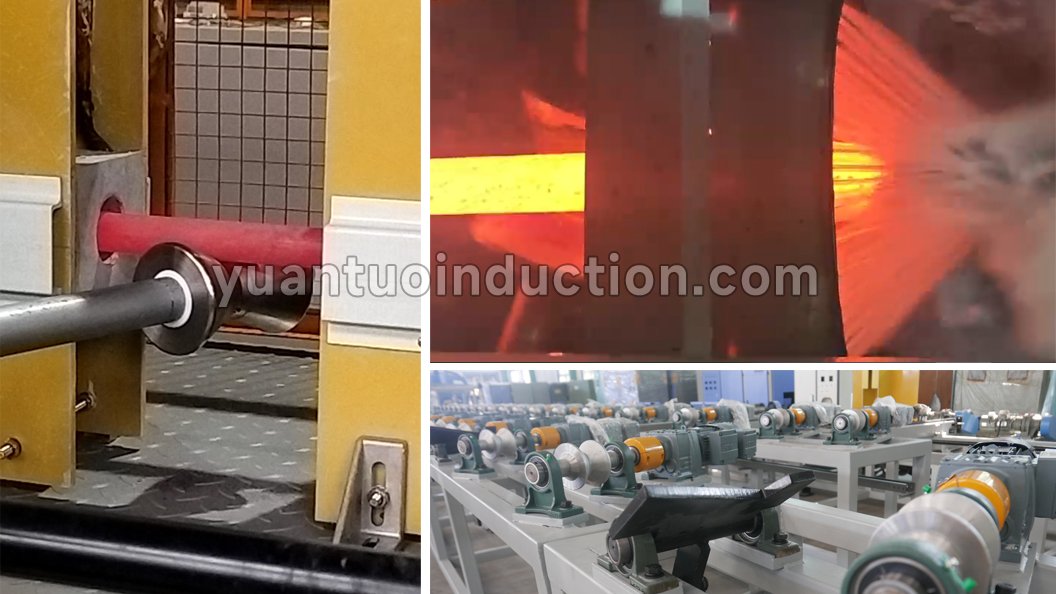
Let’s first address bar stock deformation. Whether or not a bar deforms after heat treatment cannot be simplistically reduced to the notion that “induction heating guarantees zero deformation” or that “post-treatment straightening is always mandatory.” The actual outcome depends on a confluence of factors: the bar’s material composition, diameter range, length, heating uniformity, material handling and support mechanisms, the balance of the quenching and cooling process, and the compatibility of the subsequent tempering stage. If the equipment is designed with a rational synchronization of cycles across the heating, cooling, and conveying zones—and if the induction coils and spray quenching systems are appropriately engineered—the degree of bar deformation is typically controllable. For products with stringent quality requirements, provisions can be made—in accordance with relevant standards—for either inline or offline straightening processes; however, whether such straightening is truly necessary must be determined based on the client’s specific product standards and the ultimate functional requirements of the application.
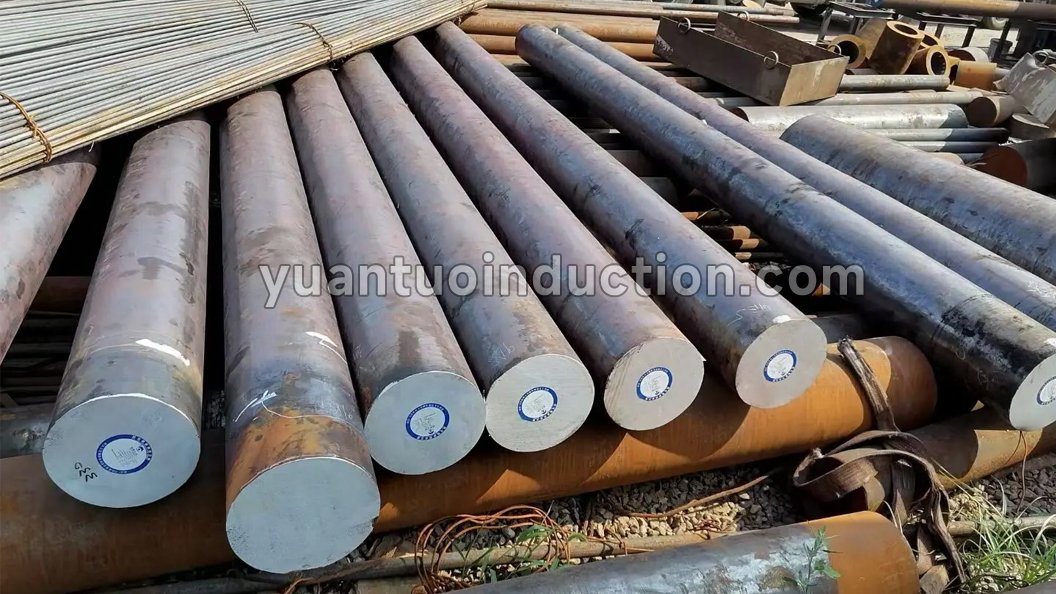
Next, let’s consider whether the hardened layer meets specifications. The formation of the hardened layer in bar stock is not solely determined by the heating temperature; it is, in fact, more critically dependent on factors such as frequency selection, power distribution, heating duration, material feed rate, and cooling intensity. For workpieces made of the same material, if there are significant variations in diameter, the thermal response—from the surface inward to the core—will differ accordingly; consequently, the equipment solution must be specifically engineered to accommodate the full range of required specifications. A truly sophisticated bar stock tempering system does not merely “heat the workpiece to a glowing red”; rather, it ensures that the heating depth, cooling rate, and subsequent tempering process collectively fulfill the precise metallurgical requirements. This approach makes it significantly easier to consistently achieve the required hardened layer depth and ensure stable microstructural properties.
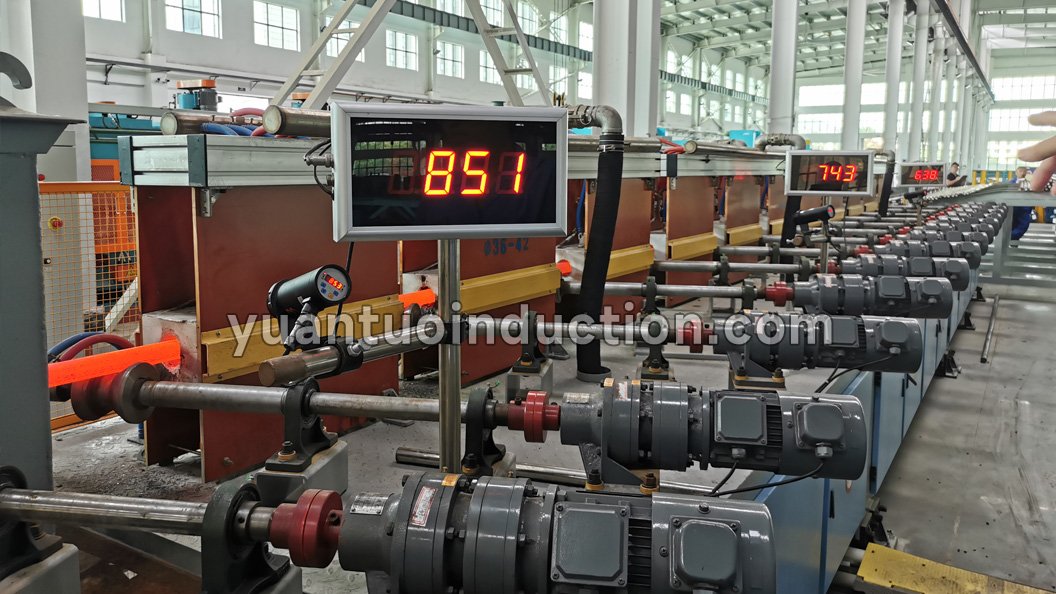
Regarding the issue of surface hardness variation, clients are primarily concerned about inconsistencies occurring along the length of a single bar, variations around its circumference, or significant fluctuations between different production batches. The root causes of such surface hardness variations typically include non-uniform heating, unstable centering of the workpiece, fluctuations in conveying speed, uneven spray quenching, and delayed temperature feedback. The key to minimizing these hardness variations is not to simply increase the power output indiscriminately, but rather to establish a closed-loop control system that seamlessly integrates the induction heating, temperature feedback, quenching and cooling, and the overall cycle timing of the entire production line. Only when the entire line is truly harmonized and integrated can the uniformity of the surface hardness be consistently and reliably maintained. Hebei Yuantuo offers customized services for bar tempering and quenching heat treatment equipment, tailored to the specific material, specifications, performance requirements, and production cycle demands of various bar products. Our professional engineers provide personalized, one-on-one consultations—including complimentary design proposals—and can provide on-site application videos of the equipment to help clients gain a more intuitive understanding of the process results and actual operational status.
