
Selecting an induction heat treatment line is not simply about choosing a power supply or comparing equipment prices. A reliable solution should be designed according to the workpiece dimensions, steel grade, required heat treatment process, production capacity and workshop conditions.
For continuous production, the heating system, quenching section, tempering section, conveyor system and automatic temperature control should work together to ensure stable product quality and production efficiency.

The diameter of the steel bar is one of the most important parameters when designing an induction heating line.
Yuantuo steel bar induction heating equipment is mainly designed for:
12–150 mm
(Conventional quenching and tempering applications are generally within 120 mm.)

Forging Heating
Bar Diameter:
22–400 mm
Different dimensions usually require different induction coil designs and power configurations.
Before requesting a quotation, the required process should be clearly defined.
Typical applications include:
Each process requires a different production line configuration.
A continuous quenching and tempering line normally includes:
Different steel grades require different heating temperatures and heat treatment parameters.
Typical materials include:
Providing the steel grade helps engineers recommend a more suitable induction heating solution.
Production capacity influences the configuration of the complete production line.
Customers are recommended to provide:
These parameters help determine the appropriate induction power supply, conveyor system and cooling system.
Stable temperature control is essential for consistent hardness and product quality.
Modern induction heat treatment lines generally use:
These technologies help maintain stable heating temperatures throughout continuous production.
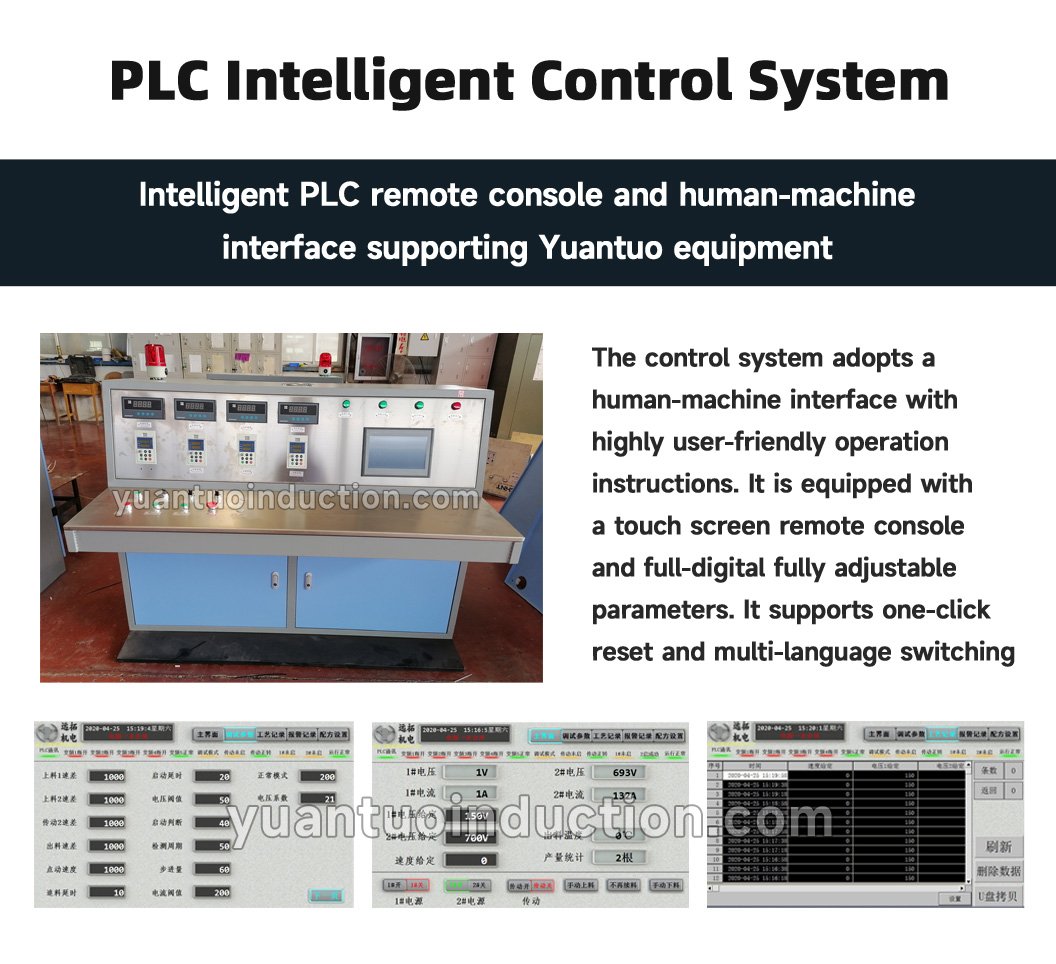
Automation options may include:
The appropriate automation level depends on production capacity and factory requirements.
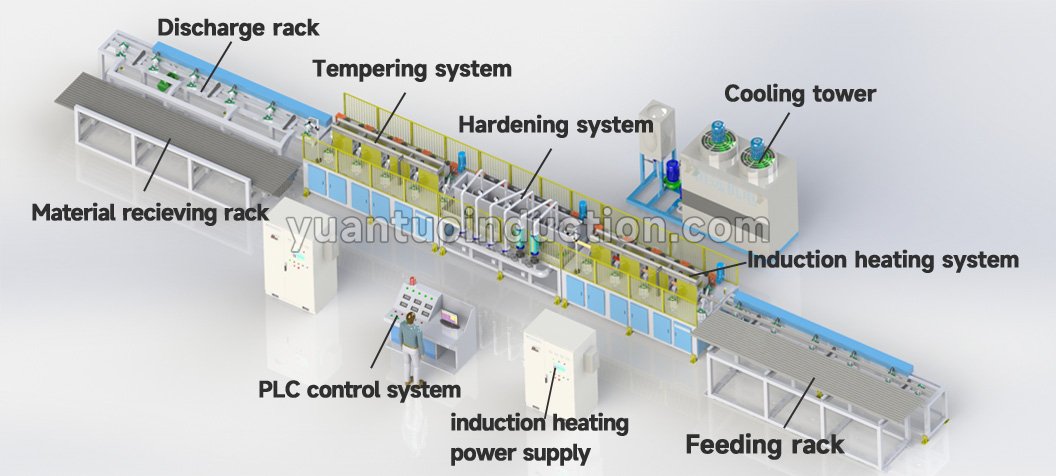
Before equipment design, customers are advised to prepare:
These factors help optimize the equipment layout and installation process.
Steel bar quenching and tempering lines are usually customized according to each project.
Equipment configuration should be determined based on:
A customized solution generally provides better production stability than selecting standard equipment without process evaluation.
Before requesting a quotation, prepare the following information:
| Item | Information |
|---|---|
| Workpiece | Steel Bar |
| Diameter | 12–150 mm |
| Length | Actual Length |
| Steel Grade | 45#, 40Cr, Alloy Steel, etc. |
| Heat Treatment Process | Quenching / Quenching & Tempering |
| Production Capacity | Bars/hour or Tons/hour |
| Power Supply | Workshop Voltage |
| Automation | Semi-automatic or Fully Automatic |
Yes. Within an appropriate size range, induction coils and process parameters can be designed to accommodate multiple bar diameters.
If the process requires quenching and tempering, a tempering section is normally included after quenching. For quenching-only applications, the configuration depends on the product requirements.
Since the equipment is custom-built, factory acceptance testing can normally be arranged before the final payment according to the agreed technical specifications.
Customers are recommended to provide workpiece dimensions, steel grade, required process, production capacity and workshop conditions.
Website:yuantuoinduction.com
WhatsApp:+86-15226757228
Email:yuantuo38@gmail.com
