
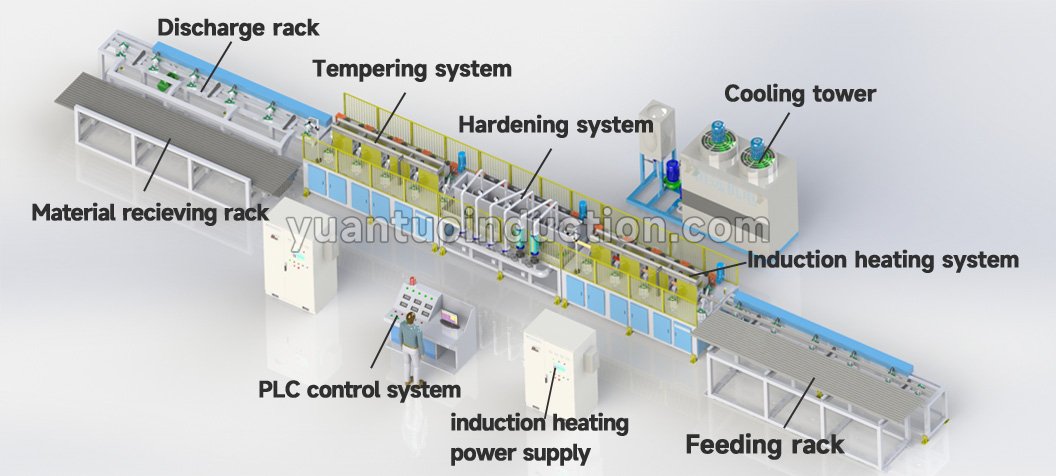
A continuous induction heat treatment line involves several coordinated production stages, including:
If these processes operate independently, production rhythm and process stability may become difficult to maintain.
A PLC control system coordinates the operation of different production units, helping the entire line operate as an integrated process.
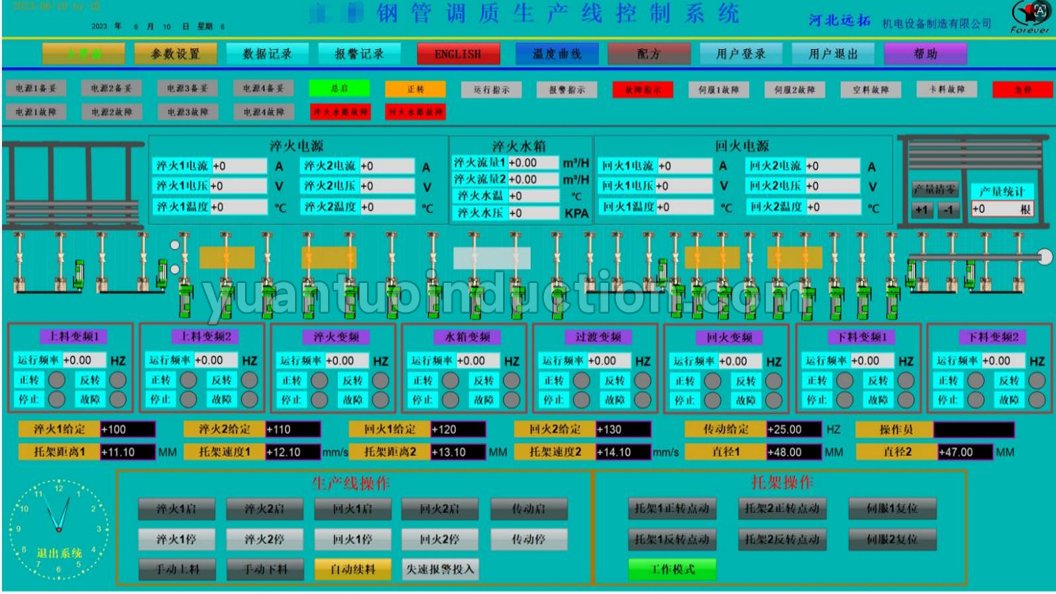
The specific functions depend on the production line configuration, but PLC systems commonly coordinate:
The control strategy is typically configured according to production requirements and the desired level of automation.
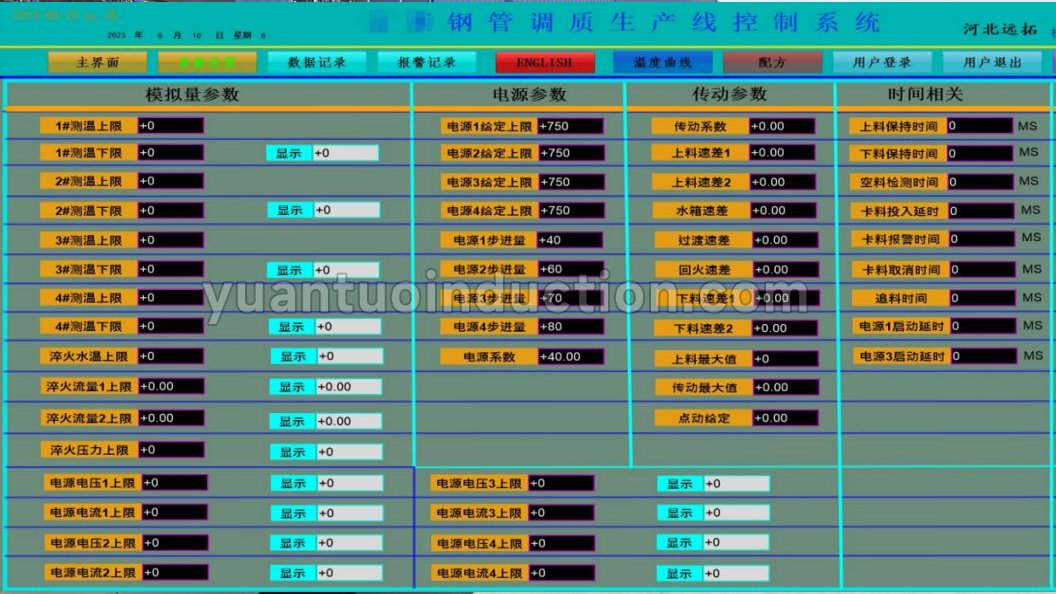
A properly designed automation system can help:
Automation is not intended to replace operators, but to improve process consistency and production control.
Different products often require different production settings.
Typical parameters include:
Managing these parameters within the control system helps reduce manual adjustments when switching between products and improves production efficiency.
Not necessarily.
The appropriate level of automation depends on factors such as:
Each project may require a different automation strategy based on its production objectives.
Automatic Loading
↓
PLC Automatic Control
↓
Induction Heating
↓
Online Temperature Measurement
↓
Automatic Power Regulation
↓
Spray Quenching
↓
Tempering (If Required)
↓
Cooling
↓
Automatic Unloading
Several misconceptions are common when planning automation systems:
❌ Assuming a PLC only controls the conveyor.
❌ Believing higher automation always produces better results.
❌ Overlooking process parameter management.
❌ Ignoring production data collection.
Successful automation depends on matching the control strategy to the production process rather than simply increasing system complexity.
When evaluating automation for a continuous heat treatment line, engineers generally recommend considering:
An effective PLC system should simplify operation while supporting stable production.
Automation requirements vary according to:
For this reason, PLC control systems for continuous induction heat treatment lines are typically designed as part of a customized engineering solution rather than using a standard configuration.
Before requesting a quotation, prepare the following information:
✔ Workpiece dimensions
✔ Steel grade
✔ Heat treatment process
✔ Required automation level
✔ Production capacity
✔ Production data recording requirements
✔ Factory layout
No.
The level of automation can be configured according to the size and requirements of each project.
Depending on the system configuration, production parameters and operating data can be recorded for process management and traceability.
A properly designed automation system helps maintain stable operating conditions, improving repeatability throughout continuous production.
Yes.
Depending on the control system design, different process parameters can be managed and recalled for different workpieces or production requirements.
Previous Article
How Infrared Temperature Measurement Improves Continuous Induction Heat Treatment
Next Article
How Process Parameter Management Improves Heat Treatment Consistency
Related Products
Planning an automated induction heat treatment line involves more than selecting a PLC. Workpiece dimensions, steel grade, heat treatment process, production capacity and automation objectives all influence the control strategy.
Preparing this information before discussing your project enables engineers to evaluate the production process and recommend a customized induction heating solution that matches your manufacturing requirements.
