
When selecting induction heat treatment equipment, many users first focus on one question:
How much power is required?
Power is certainly an important design parameter.
However, for continuous induction heat treatment lines, heating performance depends on much more than power output.
Other factors also influence the final result, including:
A suitable induction heating system should be designed according to the complete process requirements rather than a single parameter.
Frequency selection influences how electromagnetic energy is distributed inside the workpiece.
Different products require different heating characteristics depending on:
For example:
Small-diameter steel bars and large-diameter steel products may require different heating solutions due to different heat penetration characteristics.
Incorrect frequency selection may lead to:
Therefore, frequency should be selected according to the actual workpiece and process requirements.
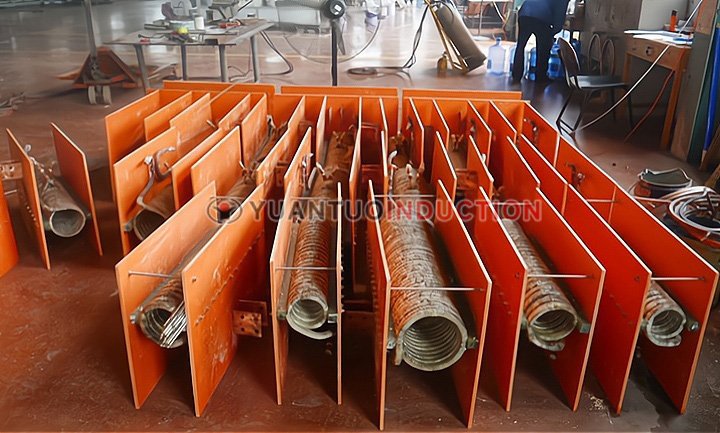
The induction coil is one of the most important components in an induction heating system.
A proper coil design should consider:
Different workpieces normally require different coil structures.
For example:
Using a general-purpose coil without process evaluation may result in:
Induction hardening is not only a heating process.
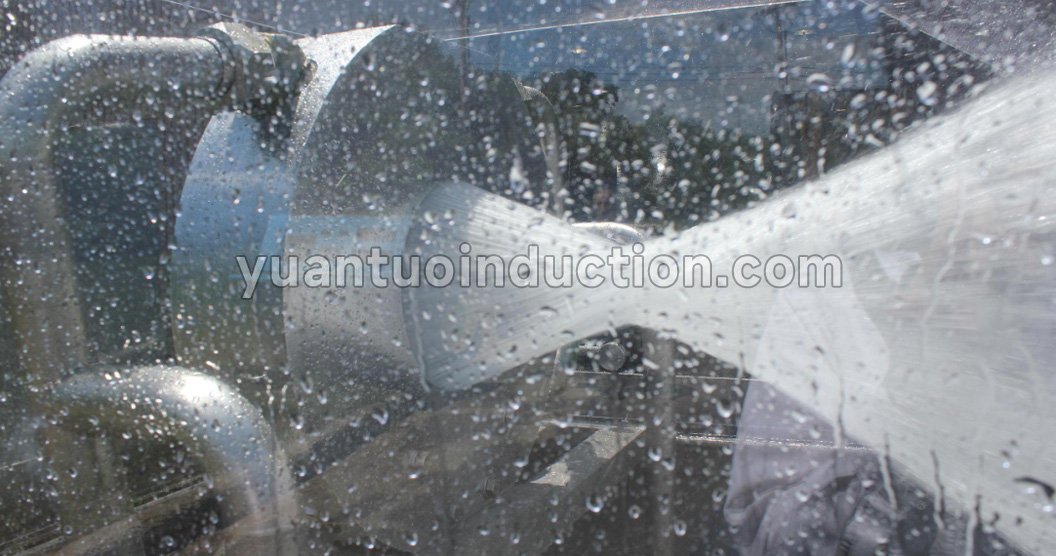
The cooling process after heating is equally important for achieving stable heat treatment performance.
A suitable cooling system should consider:
Unstable cooling conditions may influence:
Therefore, the heating system and cooling system should be considered as one complete process.
In addition to frequency, coil design and cooling configuration, a complete evaluation should include:
These factors together determine the appropriate induction heating solution.
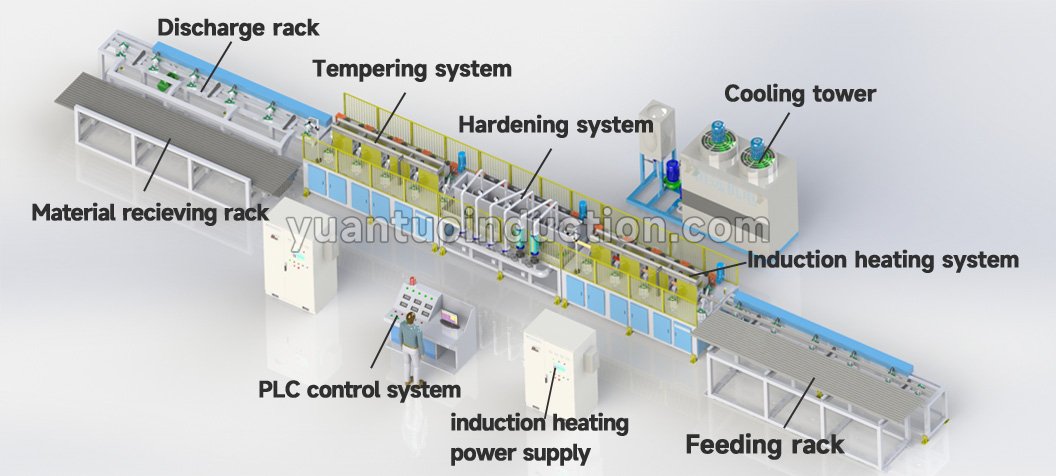
Automatic Loading → Induction Heating → Online Temperature Monitoring → Automatic Process Control → Spray Quenching → Tempering (According to Requirements) → Cooling → Automatic Unloading
Power is important, but it cannot represent the complete heating process.
Different workpieces require different heating characteristics.
Different geometries usually require different coil designs.
Stable cooling is essential for consistent heat treatment results.
When selecting an induction heating system, engineers should evaluate:
A complete process evaluation is usually more important than comparing individual equipment parameters.
Different production applications have different requirements.
Steel bars, steel pipes and other metal products vary in:
Therefore, continuous induction heat treatment lines are normally developed according to specific production conditions.
A complete solution should include coordination between:
Proper matching of these components helps achieve stable and repeatable production.
Before requesting an induction heating solution, prepare:
✔ Workpiece type
✔ Dimensions
✔ Length
✔ Material grade
✔ Heat treatment requirements
✔ Hardening depth requirements
✔ Production capacity
✔ Automation requirements
Power is an important parameter, but frequency, coil design and process requirements must also be considered together.
Because workpiece geometry, size and heating requirements influence electromagnetic field distribution and temperature uniformity.
The cooling process directly affects hardening performance and production consistency, so it must be designed together with the heating system.
A suitable supplier should understand the workpiece, heat treatment process and production requirements, rather than only providing a standard heating unit.
Previous Article
How PLC Control Improves Automation in Continuous Induction Heat Treatment Lines
Next Article
How Process Parameter Management Improves Heat Treatment Consistency
Related Products
Selecting an induction heating system requires evaluation of the complete production process, not only the power supply.
Workpiece dimensions, material grade, heat treatment requirements, production capacity and automation objectives all influence the final solution design.
Providing complete technical information helps engineers develop a customized induction heating system that matches the actual manufacturing requirements.
