
Precise induction temperature compensation can help steel mills improve billet temperature uniformity and better match continuous rolling requirements
In continuous casting and rolling production, many steel mills aim to maximize the utilization of billet residual heat through processes such as:
Ideally, a billet leaving the continuous casting process can maintain sufficient temperature and directly enter the rolling process.
However, during actual production, temperature reduction may occur due to:
As a result:
The billet may enter the rolling mill without reaching the optimum rolling temperature.
A common response is:
“Increase the furnace temperature.”
However, this is not always the most efficient solution.
The real objective of billet temperature compensation is not to heat all billets to a higher temperature.
It is:
To accurately compensate the missing temperature before rolling while maintaining production efficiency and quality.
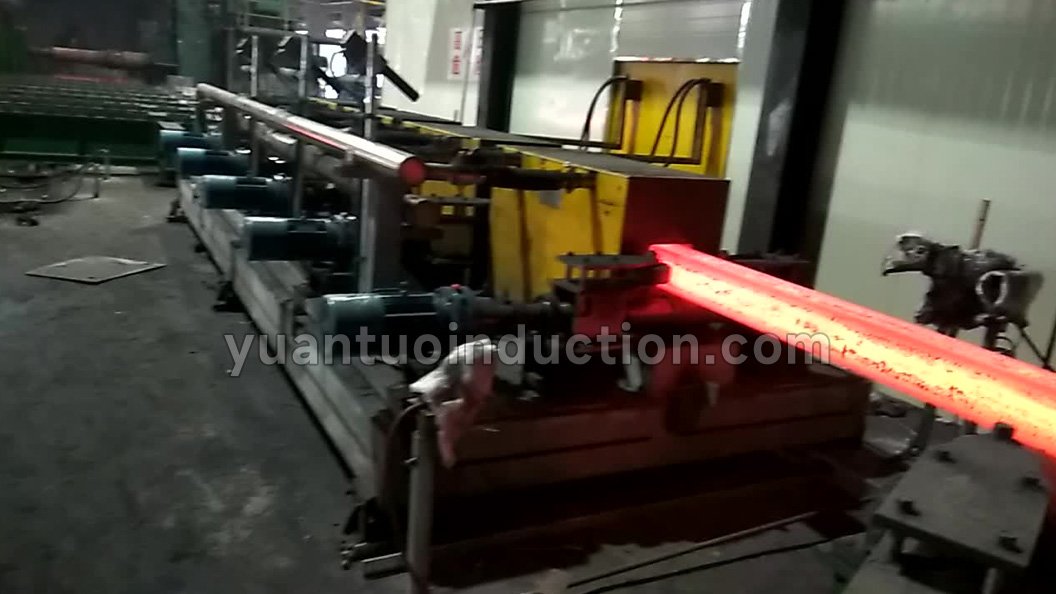
Traditional heating methods usually work by:
Increasing furnace temperature
↓
Heating the entire billet
↓
Achieving the required rolling temperature
However, this approach has several limitations.
All billets receive additional heating.
Even when some areas already meet the required temperature, the entire billet continues to absorb more heat.
This may result in:
Different areas of the billet may have different temperature conditions.
For example:
Increasing furnace temperature cannot precisely solve localized temperature deficiencies.
Therefore, billet temperature compensation is not about:
“Heating all billets hotter.”
It is about:
“Providing targeted temperature compensation where it is actually needed before rolling.”

The main advantage of induction heating is:
Energy is directly generated inside the billet through electromagnetic induction.
Compared with traditional furnace heating, induction temperature compensation provides:
It is especially suitable when:
For example:
Initial billet temperature:
700–800°C
Target temperature:
1000–1100°C
In this situation, the process does not necessarily require complete reheating.
Instead, it requires:
Rapid and controlled temperature compensation.
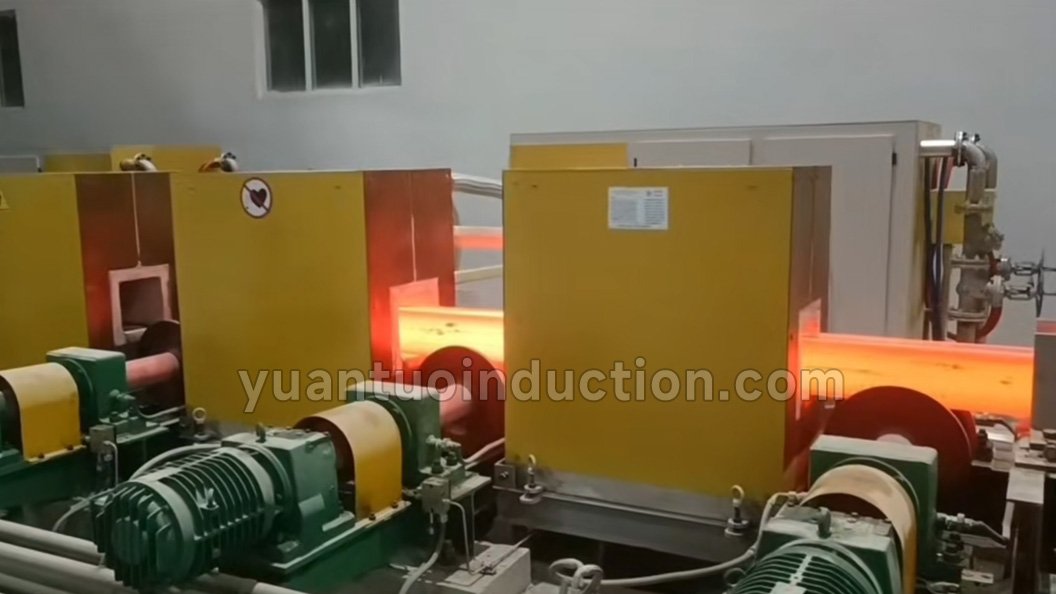
Billet temperature compensation is not simply a matter of selecting a high-power induction system.
The engineering evaluation needs to consider:
Including:
Including:
Including:
These factors determine:
During continuous casting and transportation, different parts of the billet experience different heat loss conditions.
Common situations include:
If the billet enters rolling with significant temperature variation, it may affect:
Therefore, some production lines need to focus specifically on:
Improving billet temperature uniformity before rolling.
A billet induction heating system can provide compensation according to actual process requirements.

One of the main concerns for steel mills is:
“Will the temperature compensation system affect the rolling process?”
For continuous production, the heating system must match:
If the compensation system cannot keep up:
It becomes a production bottleneck.
If the system is oversized:
It increases investment and operating costs.
Therefore, the correct design should be based on:
Billet Throughput + Temperature Difference + Production Speed
rather than selecting equipment only according to power.
Billet temperature compensation is not a fixed heating process.
During actual production:
Therefore, a stable system requires:
↓
↓
↓
This helps maintain:
A complete solution normally includes:
↓
↓
↓
↓
↓
The purpose is not simply to provide an induction heater.
The real objective is:
To make the billet temperature compensation system a stable part of the complete steelmaking–continuous casting–rolling process.
For a complete billet temperature compensation project, engineers need to evaluate:
Including:
↓
Including:
↓
Including:
↓
Including:
The final goal is:
Not simply heating billets, but providing a stable thermal condition before rolling.
| Parameter | Required Information |
|---|---|
| Billet Cross Section | Example: 150×150 mm |
| Billet Length | Single billet length |
| Material Grade | Steel grade |
| Initial Temperature | Current temperature range |
| Target Temperature | Required outlet temperature |
| Production Capacity | t/h |
| Transfer Speed | m/min |
| Rolling Mill Information | Downstream process requirements |
| Temperature Requirements | Head/tail or surface/core temperature difference |
Because increasing overall furnace temperature may increase energy consumption and oxidation. Induction compensation can provide targeted temperature increase according to actual temperature requirements.
Normally, billet induction heating is mainly used for temperature compensation of already-hot billets rather than replacing complete reheating systems.
Because billet entry temperature changes during production, and real-time feedback is needed to adjust heating power.
Yes. The system can be designed according to the plant layout and production rhythm to match continuous rolling requirements.
Before selecting an induction heating system, it is important to evaluate:
Billet Size + Initial Temperature + Target Temperature + Production Capacity + Rolling Process Requirements
Hebei Yuantuo Electromechanical provides customized billet induction heating and temperature compensation solutions designed around actual steel mill production conditions.
The objective is not simply to heat the billet.
The objective is:
To provide a stable and uniform billet temperature condition before rolling, while maintaining continuous production efficiency.
For an initial technical evaluation, please provide:
Billet Cross Section / Length / Material Grade / Initial Temperature / Target Temperature / Production Capacity / Rolling Process Information.
WhatsApp:+86 15226757228
Email:yuantuo38@gmail.com
Website:www.yuantuoinduction.com
