
For steel bar heat treatment, both induction heating and gas furnace heating can be used in different production conditions. However, when the production requires continuous operation, fast response, accurate temperature control and integration with quenching and tempering, induction heating has clear process advantages.

A gas furnace usually heats a larger chamber or batch of materials. It may be suitable for some batch-type heating processes, but the heating time is longer and temperature adjustment is slower. For steel bar quenching and tempering, especially in continuous production, slow response may affect line rhythm and temperature consistency.
Induction heating directly heats the metal workpiece through electromagnetic induction. The heating speed is fast, and the heating zone can be designed according to bar diameter, production speed and target temperature. When combined with infrared temperature measurement and PLC closed-loop control, the system can adjust heating power according to real-time temperature feedback.
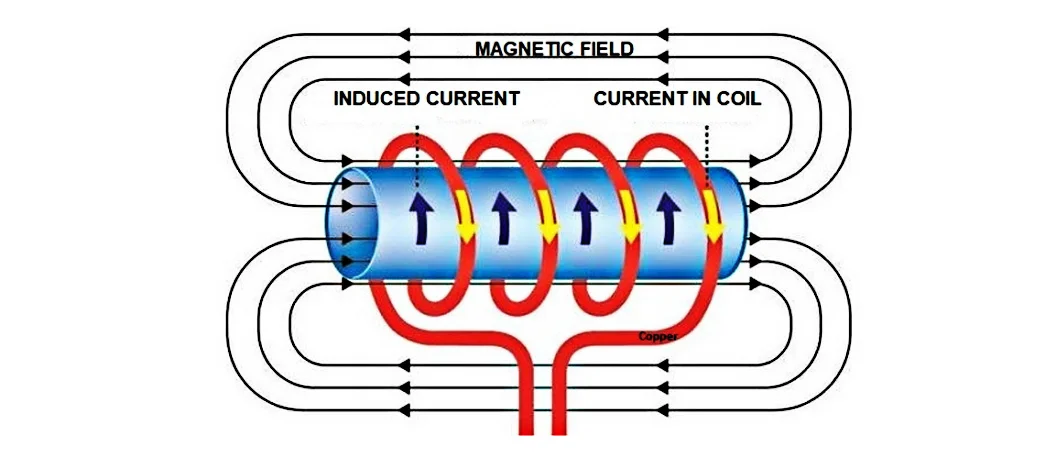
For steel bars, round bars and rods, the choice of frequency and power is very important. The frequency affects heating depth, while power and heating length affect production capacity. If these parameters are not matched correctly, the line may face surface-core temperature difference, unstable hardness or insufficient throughput.
Hebei Yuantuo designs complete induction heat treatment lines for steel bar quenching, tempering and surface hardening. Compared with a single heating unit, Yuantuo focuses on complete line matching, including feeding, heating, temperature detection, quenching spray, tempering, discharge and control system integration.
For customers who need continuous steel bar heat treatment, induction heating is often a practical choice when stable production rhythm, temperature control and automated operation are required.
