
Real workshop photos of Yuantuo pipe induction quenching build—quenching section setup, cooling interfaces, interlock checks, and control cabinet preparation before shipment.
pipe induction quenching, steel pipe quench line, induction quenching system for pipes, cooling interlocks, quench cooling, control cabinet, factory footage, induction heating line manufacturer
In pipe induction quenching, stable results depend on synchronized cooling and protection logic—not only heating power.
This post shares real Yuantuo workshop footage of a pipe quenching section build: induction heating zone, cooling interfaces, interlocks/alarms, and control cabinet readiness before shipment.
If you are evaluating suppliers, these are practical checkpoints most buyers verify during a factory visit.
Pipe induction quenching is a process where “seconds” matter.
A small mismatch in cooling flow, spray pattern, or interlock logic can cause hardness variation, distortion, or ovality—especially when production rhythm increases.
That’s why Yuantuo treats the quenching section as a complete system: heating + cooling + protection + control.
We publish real factory footage from our workshop to show how these parts are prepared before shipment.
In today’s update, you can see the build and verification focus points for a pipe induction quenching section.
【Image 1|Workshop Overview (Pipe Quench Line Build)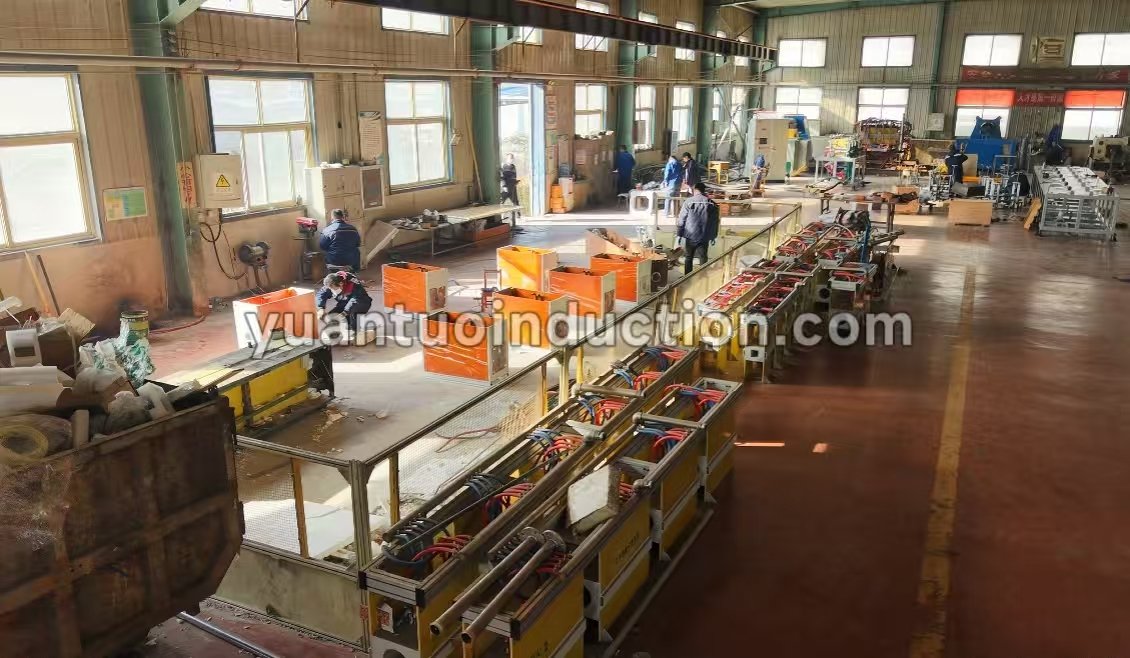
Quenching section setup (heating zone readiness)
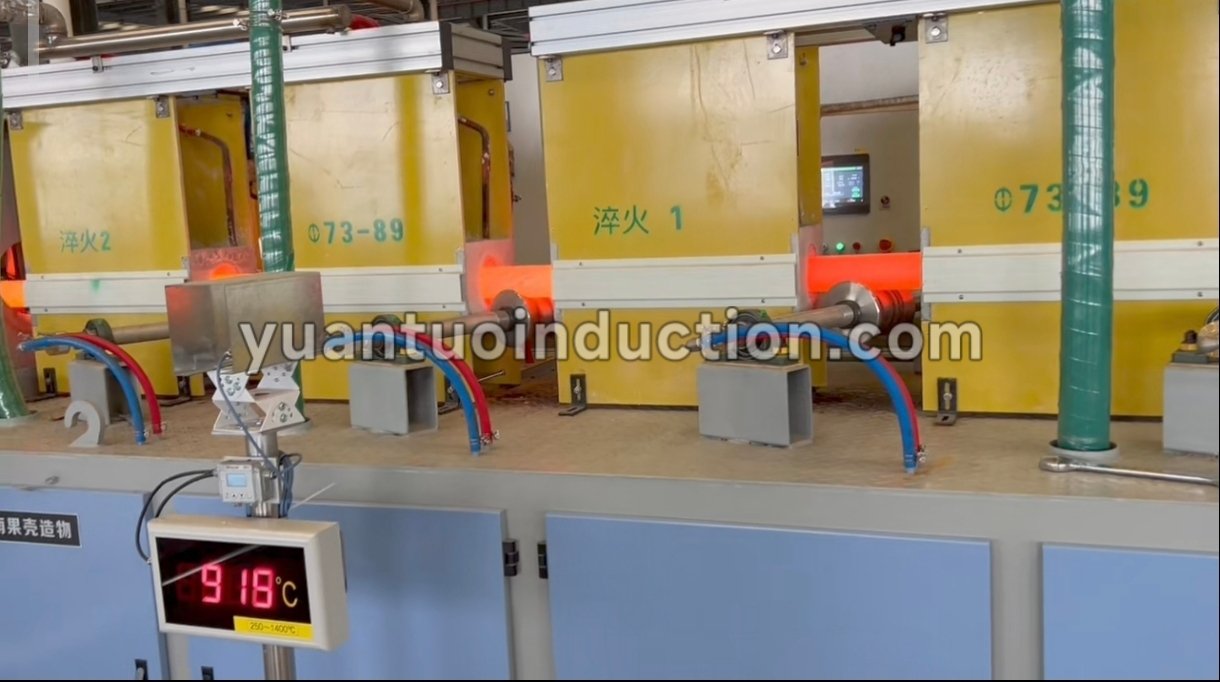
During assembly, our team focuses on:
l induction heating section alignment along the pipe path
l coil area clearance and fixation
l cable routing and labeling discipline around the quench station
【Image 2|Induction Quenching Section / Coil Area】
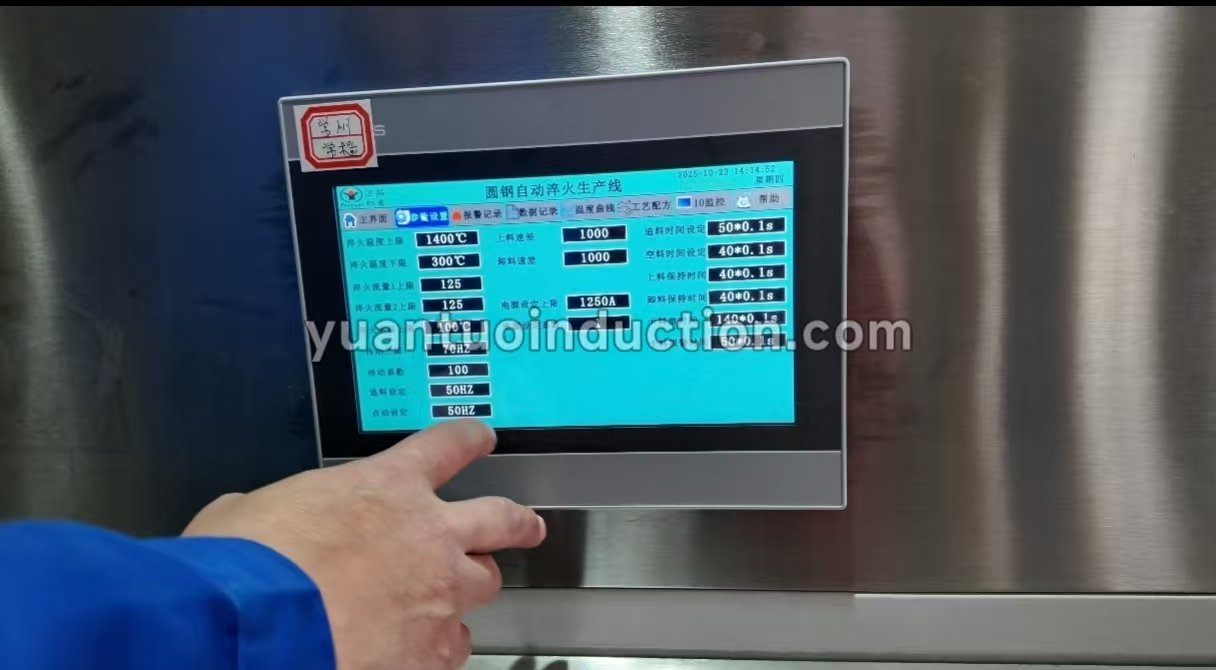
Cooling interfaces and interlock logic (safety first)
Before shipment, we confirm:
l cooling inlet/outlet interfaces and markings
l flow monitoring points (as configured)
l interlocks and alarm triggers for abnormal cooling conditions
【Image 3|Cooling Manifold / Flow Monitoring / Interlocks】
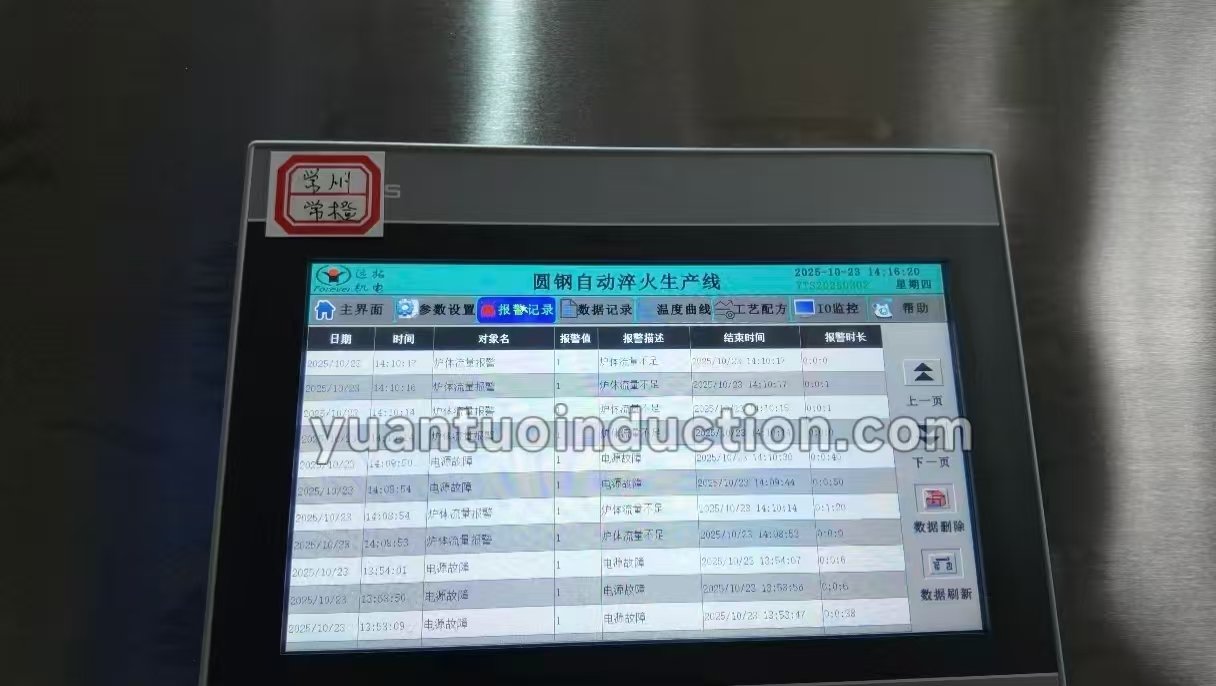
 Control cabinet readiness for commissioning speed
The control cabinet is prepared in-house, including:
l PLC/HMI pages for status, alarms, and trend monitoring
l terminal labeling and signal mapping
l protection and fault-detection configuration
【Image 4|Control Cabinet / HMI Alarm or Trend Page】
These materials reflect how we build lines for different applications. You can explore related solutions here:
Product Catalog: https://yuantuoinduction.com/products
Workshop & Project Videos: https://yuantuoinduction.com/videos/
About Yuantuo: https://yuantuoinduction.com/about-us/
To size a pipe induction quenching system properly, we usually need three inputs: pipe OD & wall thickness, target temperature range, and throughput/line rhythm.
If you share these parameters, our engineer can recommend a suitable configuration and layout direction via:
https://yuantuoinduction.com/contact-us/
