
Real workshop photos of Yuantuo PLC & HMI debugging—recipe pages, alarm logic, trend monitoring, and closed-loop temperature control readiness.PLC HMI debugging, closed-loop temperature control, infrared pyrometer, temperature feedback control, recipe management, alarm logic, trend monitoring, induction heating line manufacturer, workshop footage
Stable heat treatment is not only about heating power—it depends on control logic, alarms, and repeatable recipes.
This post shares Yuantuo’s workshop process for PLC & HMI debugging: recipe setup, alarm and interlock logic, trend pages, and feedback control readiness.
For buyers comparing suppliers, control-screen evidence is a practical way to confirm real engineering capability.
In induction heating and heat treatment, “reaching temperature” is only the starting point.
The real target is repeatability—holding the process window with stable rhythm, clear alarms, and traceable settings.
That’s why Yuantuo publishes real factory footage from PLC & HMI debugging in our workshop.
In today’s update, you can see how we prepare closed-loop temperature control before shipment.
【Image 1|HMI Recipe & Parameter Pages】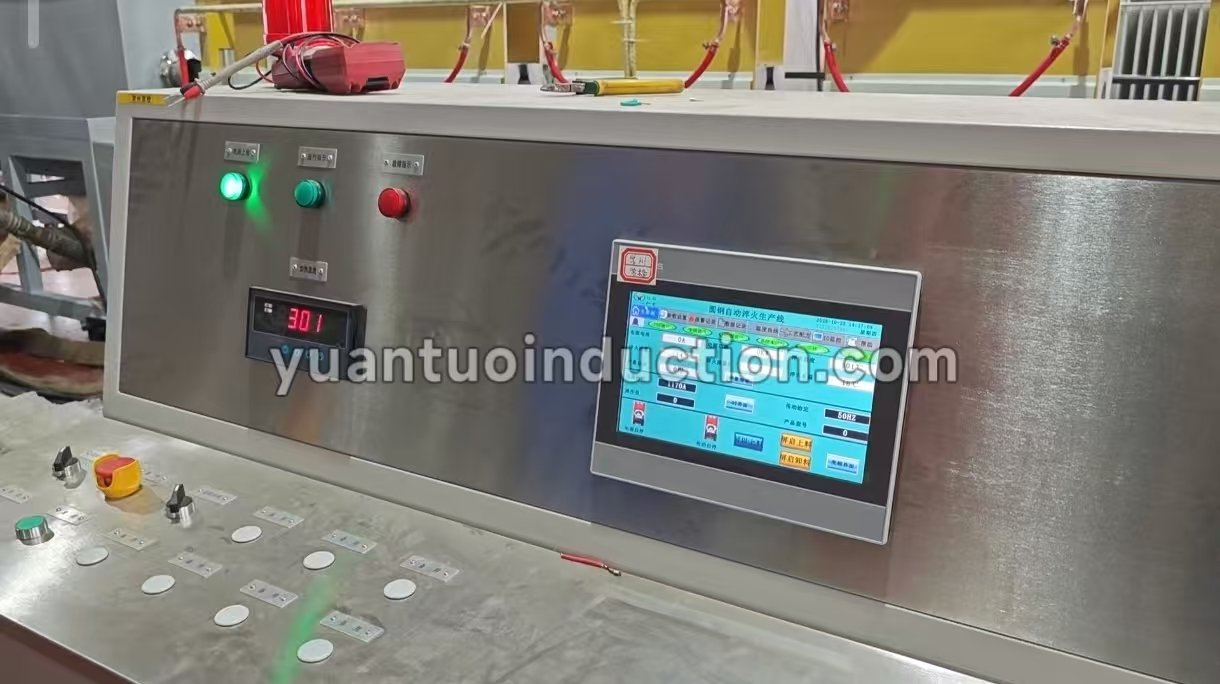
Recipe setup for repeatable production
During HMI configuration, our team focuses on:
l recipe pages for different workpiece sizes and targets
l parameter lock and permission levels (operator vs engineer)
l fast switching to match line rhythm
【Image 2|Alarm & Interlock Logic Screens】
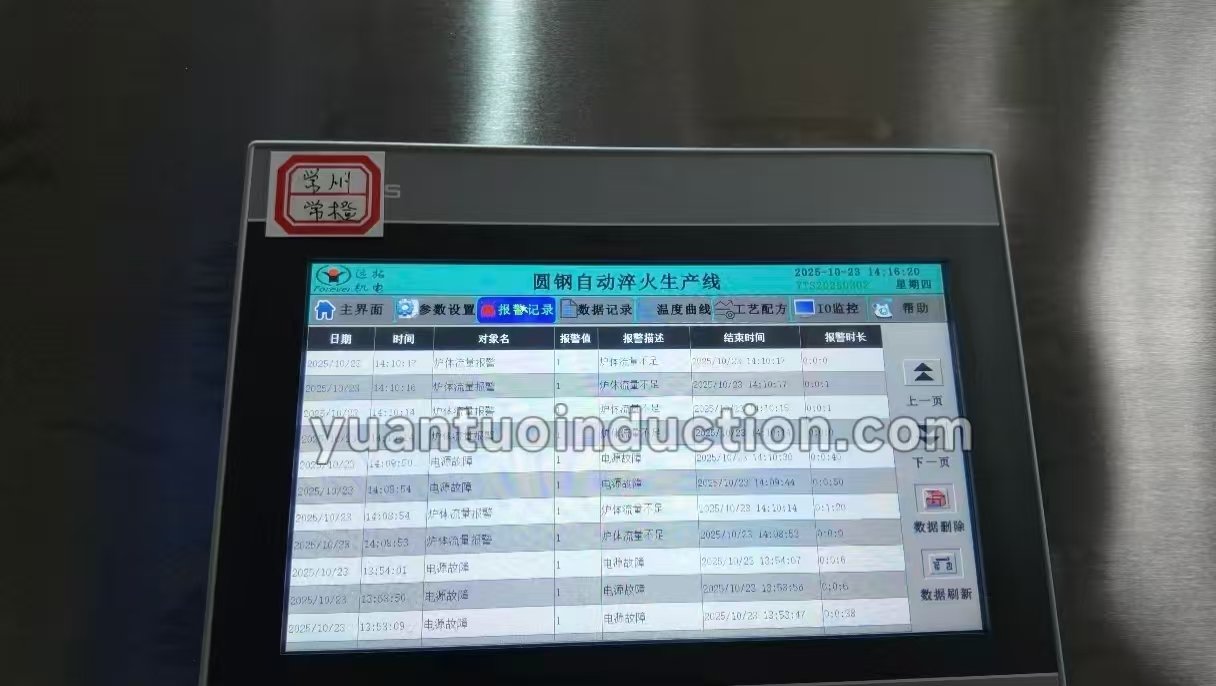
Alarms and interlocks for stable operation
To reduce downtime and risk, we prepare:
l alarm definitions and priority levels
l interlocks for cooling water, doors, and safety signals
l fault handling and safe restart sequences
【Image 3|Trend Monitoring / Temperature Curve】
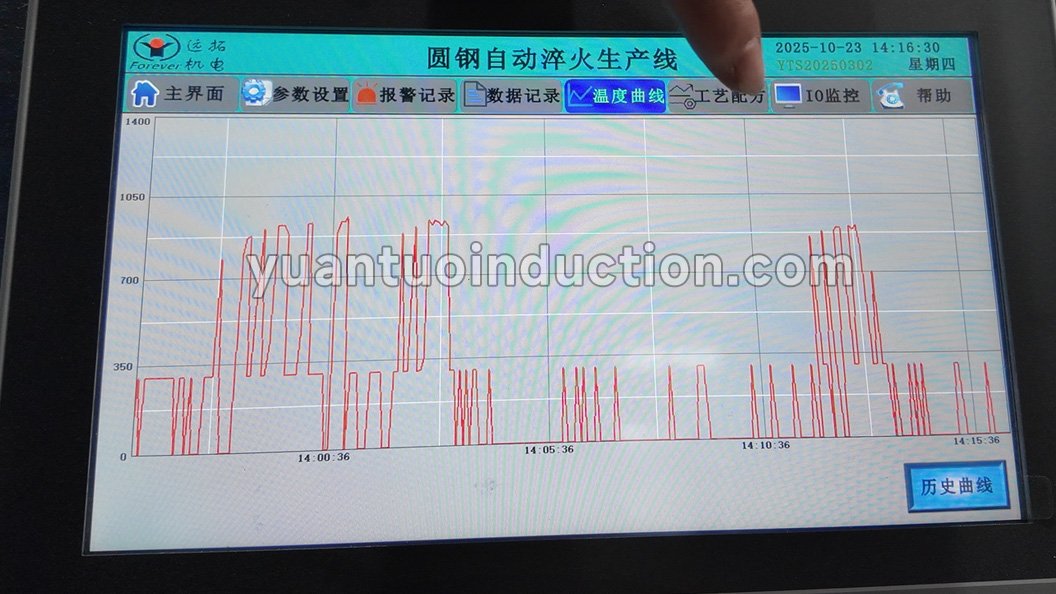
Trend pages for process visibility
For daily operation and troubleshooting, we build:
l temperature and power trends
l heating rhythm and throughput indicators
l event logs for quick root-cause review
【Image 4|Feedback Control Readiness (Pyrometer + PLC)】
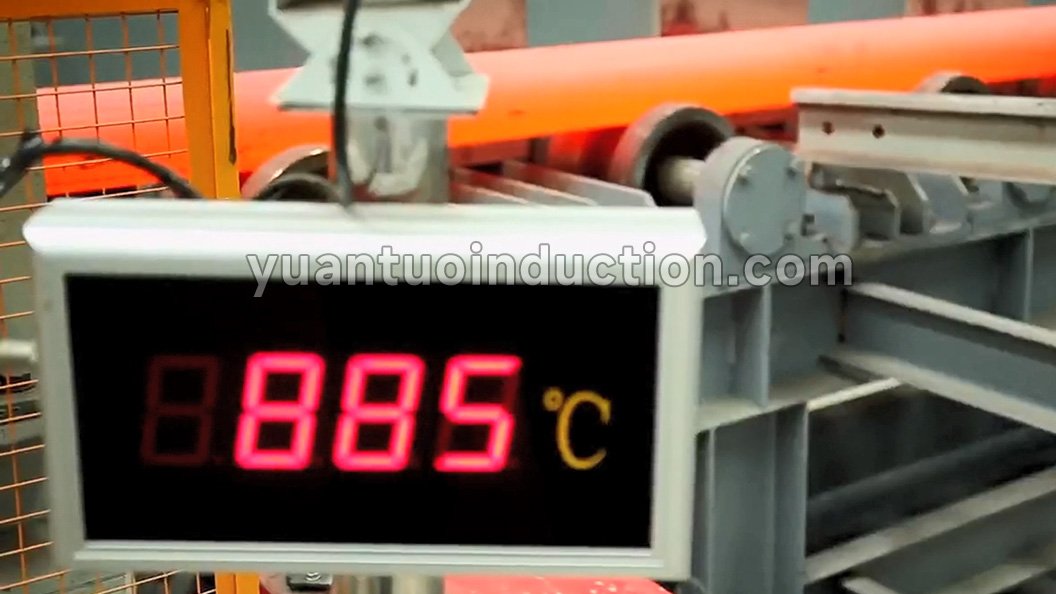
Closed-loop temperature control is where stable results are earned—especially for bar Q&T, pipe Q&T (including OCTG), and billet/slab equalizing systems. You can explore related solutions here:
Product Catalog: https://yuantuoinduction.com/products
Workshop & Project Videos: https://yuantuoinduction.com/videos/
About Yuantuo: https://yuantuoinduction.com/about-us/
To size an induction heating line properly, we usually need three inputs: workpiece size, target temperature range, and throughput/line rhythm.
If you share these parameters, our engineer can recommend a suitable configuration and layout direction via:
https://yuantuoinduction.com/contact-us/
