
Round bar heat treatment is increasingly shifting from traditional resistance furnaces to medium-frequency induction heating with online quenching and tempering. Compared with “furnace heating + water tank quench,” an induction solution supports faster heating, shorter cycle time, improved working conditions, and better production organization. Rapid, controlled heating can also help reduce scale formation and oxidation loss in many applications.
But because induction systems are custom-engineered, selecting the right configuration matters. Below are the key factors that typically determine power, frequency, line layout, and automation scope.
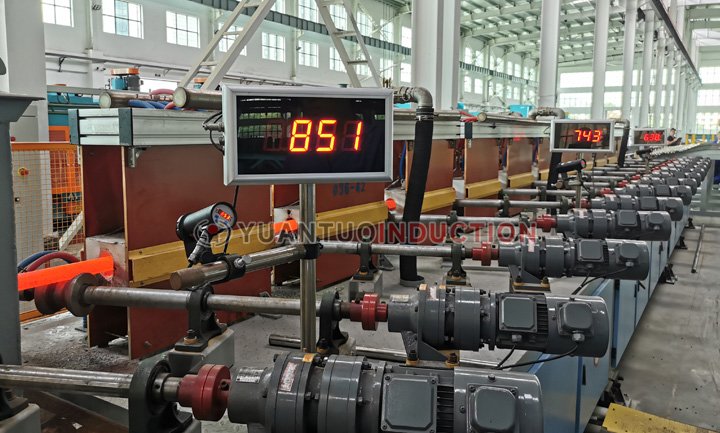
Round bars with larger diameters and longer lengths generally require:
higher available power,
lower operating frequency,
and a longer effective heating section (depending on target temperature and line speed).
For smaller bars, the requirement is usually the opposite: lower power demand and potentially higher frequency.
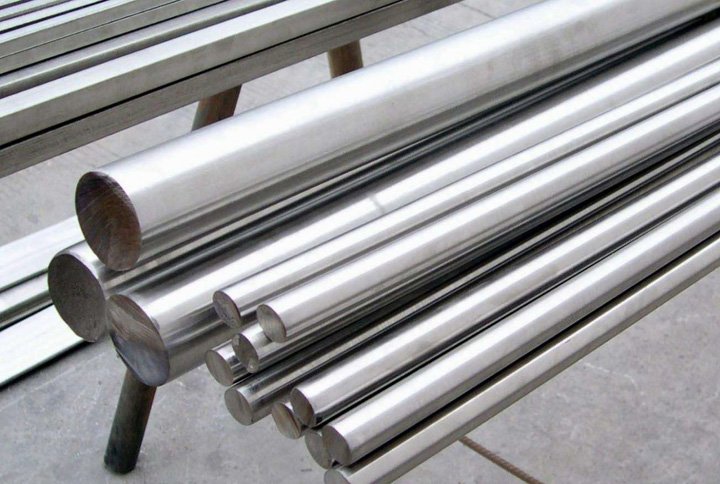
If your process needs deeper treatment depth or a larger treated area, the system typically needs:
higher power margin,
lower frequency selection,
and stable temperature control to reduce thermal gradient risk.
If the depth/area requirement is lighter, the configuration can be more compact.
When the target is higher throughput (t/h) or faster rhythm, the system selection often shifts toward:
higher power to meet heating load,
frequency and coil design matched to line speed,
and tighter control logic to keep the “temperature window” stable.
If the line runs long hours continuously, selection should consider:
adequate power reserve,
cooling capacity and protection design,
and maintenance-friendly modular structure.
A system that is “just enough” on paper may become unstable under long duty cycles.
If the distance between the power unit and heating station is long, you may need:
longer water-cooled cables/hoses,
proper cable cross-sectional sizing,
and a layout that minimizes energy loss and improves reliability.
Early layout confirmation helps avoid unnecessary cost and later site rework.
If you want higher automation, consider integrating:
PLC control system (recipes, interlocks, alarms, traceability),
material buffering/storage,
automatic loading/unloading and handling interfaces.
Automation is not “extra decoration”—it is often what stabilizes output quality and reduces dependence on operator experience.
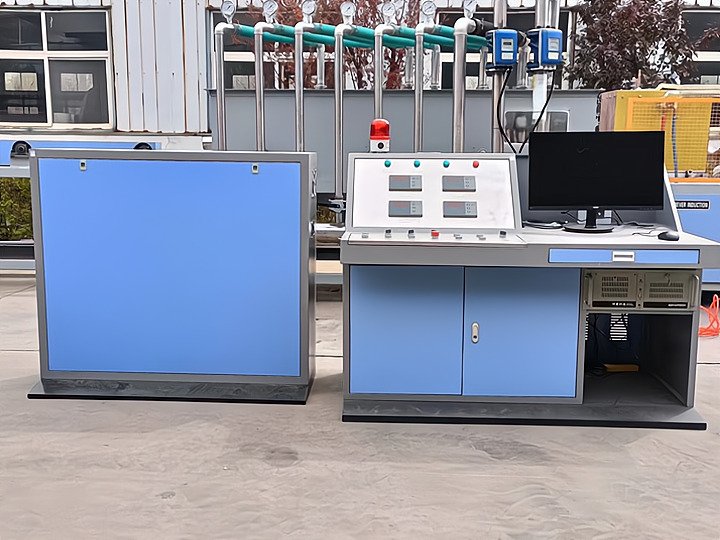
bar diameter range and length
steel grade and initial condition
target process: quench & temper / surface hardening / heating only
target properties (hardness range, toughness requirement, case depth if any)
throughput (t/h) or line speed and spacing
preferred quench method (spray / immersion / internal+external if applicable)
site utilities and layout constraints (power, water, available space)
If you send the above inputs, YuanTuo can propose a practical system window (power/frequency/heating length) and the suggested automation scope.
