
Although both processes belong to heat treatment technology, they are designed to achieve different mechanical properties.
Selecting the appropriate process depends on the steel grade, product application, mechanical performance requirements and production objectives.
Understanding the differences before purchasing equipment helps engineers configure a more suitable induction heat treatment line.
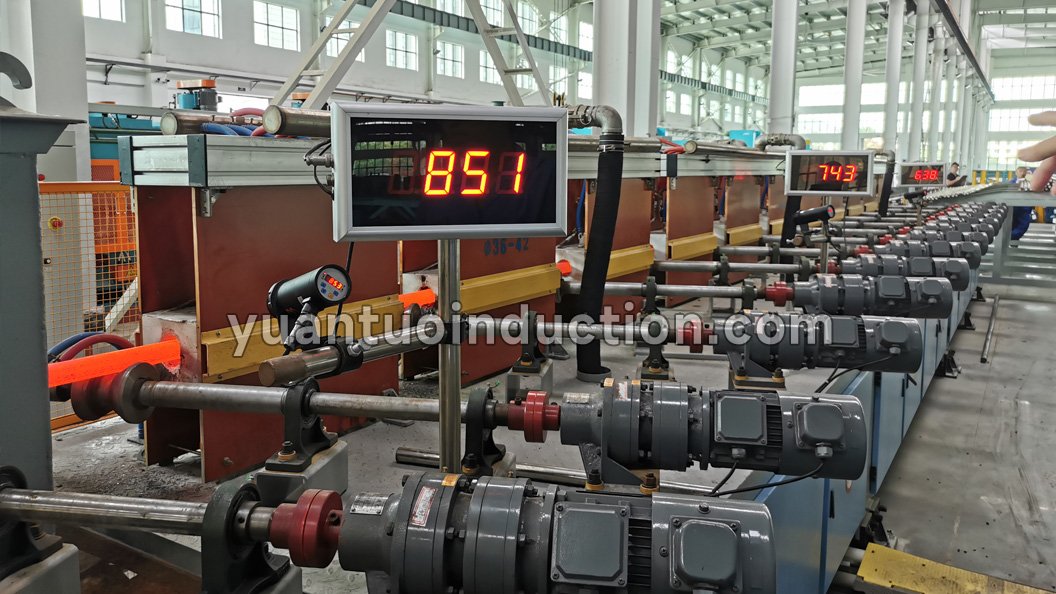
Quenching is a heat treatment process in which steel bars are heated to the required temperature and then rapidly cooled.
Its primary objective is to increase hardness, wear resistance and strength.
Continuous induction quenching offers several advantages, including:
This process is widely used for components requiring high hardness or improved wear resistance.
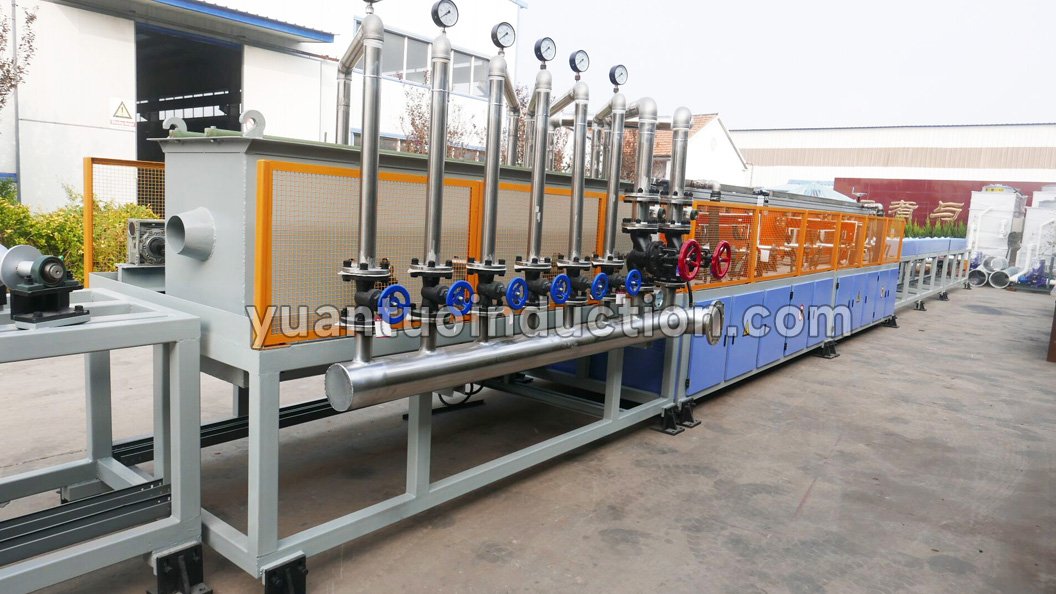
Quenching and tempering is a combined heat treatment process consisting of:
Quenching + Tempering
After quenching, the steel is reheated to a controlled tempering temperature to improve its overall mechanical properties.
Compared with quenching alone, quenching and tempering provides a better balance between:
Therefore, it is commonly used for structural components subjected to dynamic or cyclic loads.

| Comparison | Quenching | Quenching & Tempering |
|---|---|---|
| Process | Heating → Quenching | Heating → Quenching → Tempering |
| Main Purpose | Increase Hardness | Improve Comprehensive Mechanical Properties |
| Tempering Required | No | Yes |
| Final Properties | Higher Hardness | Balanced Strength and Toughness |
| Typical Applications | Wear-resistant Parts | High-strength Structural Components |
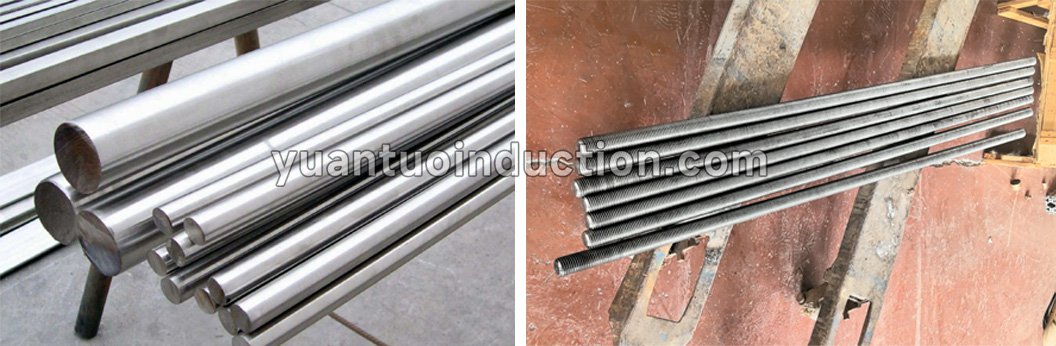
This process is commonly applied to:
These products require not only hardness but also excellent toughness and fatigue performance.
A continuous induction quenching line generally includes:
A continuous quenching and tempering line normally adds:
As a result, quenching and tempering lines usually require a more comprehensive system configuration.
Compared with conventional heating methods, continuous induction heating offers:
These advantages help improve production consistency in large-scale steel bar heat treatment projects.
Every project has different requirements regarding:
These factors directly affect induction coil design, power configuration, conveyor speed and temperature control.
For this reason, continuous steel bar heat treatment lines are typically engineered as customized solutions rather than standard machines.
Before requesting a quotation, prepare the following information:
✔ Steel bar diameter
✔ Steel bar length
✔ Steel grade
✔ Heat treatment process
✔ Target hardness
✔ Production capacity
✔ Power supply voltage
✔ Required automation level
Since tempering requires an additional heating stage and supporting equipment, the production line is generally more comprehensive than a quenching-only system.
No. The appropriate process depends on the required mechanical properties, steel grade and service conditions.
Depending on the production requirements, some customized systems can be designed with flexible operating modes.
Continuous induction heating is generally suitable for projects requiring stable production capacity, consistent product quality and continuous operation.
How to Choose the Right Steel Bar Quenching and Tempering Line
