
Pipe bending after quenching is a common problem in steel pipe heat treatment. In many cases, the reason is not only the material itself, but also uneven heating, unstable conveying or unbalanced cooling during the quenching process.
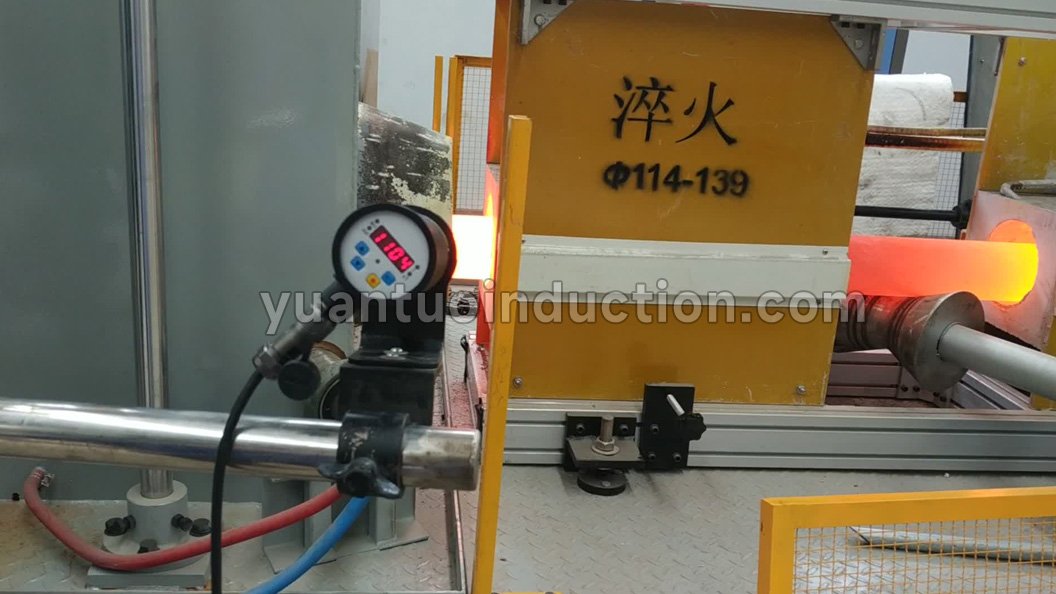
For steel pipes, the wall thickness, outer diameter and length have a direct influence on quenching stability. If the pipe surface cools too quickly while the inner wall temperature remains high, thermal stress may increase. This difference between the inner and outer temperature fields can lead to bending, ovality change or inconsistent hardness.
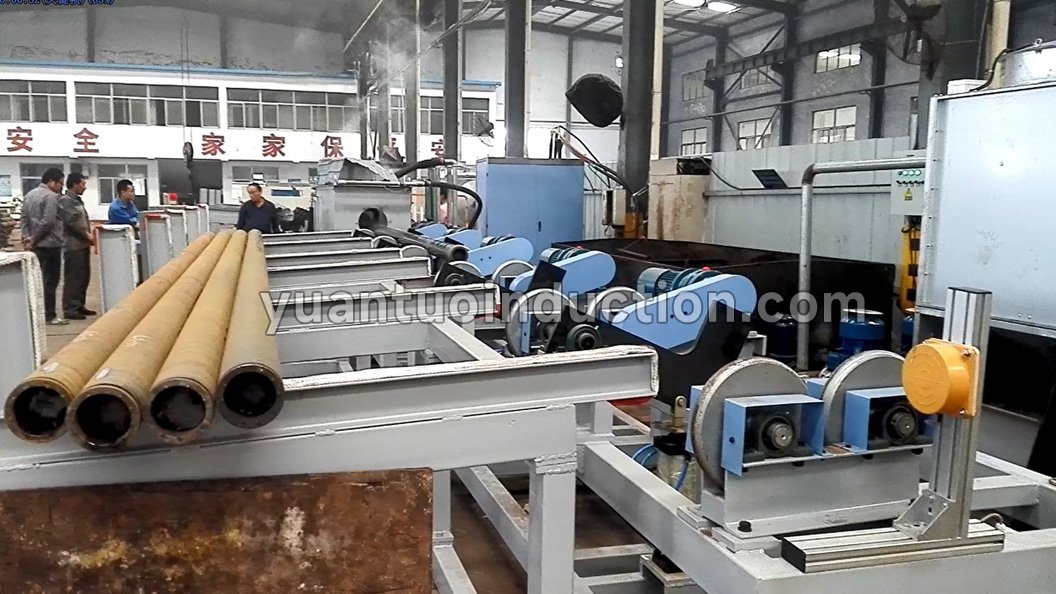
Another important factor is the cooling method. For some thin-wall pipes, external spray cooling may meet the process requirement. However, for thicker pipes or higher heat treatment standards, internal and external cooling may need to be evaluated. If cooling water pressure, spray angle, pipe rotation or conveying speed are not stable, the pipe may be cooled unevenly along its length.
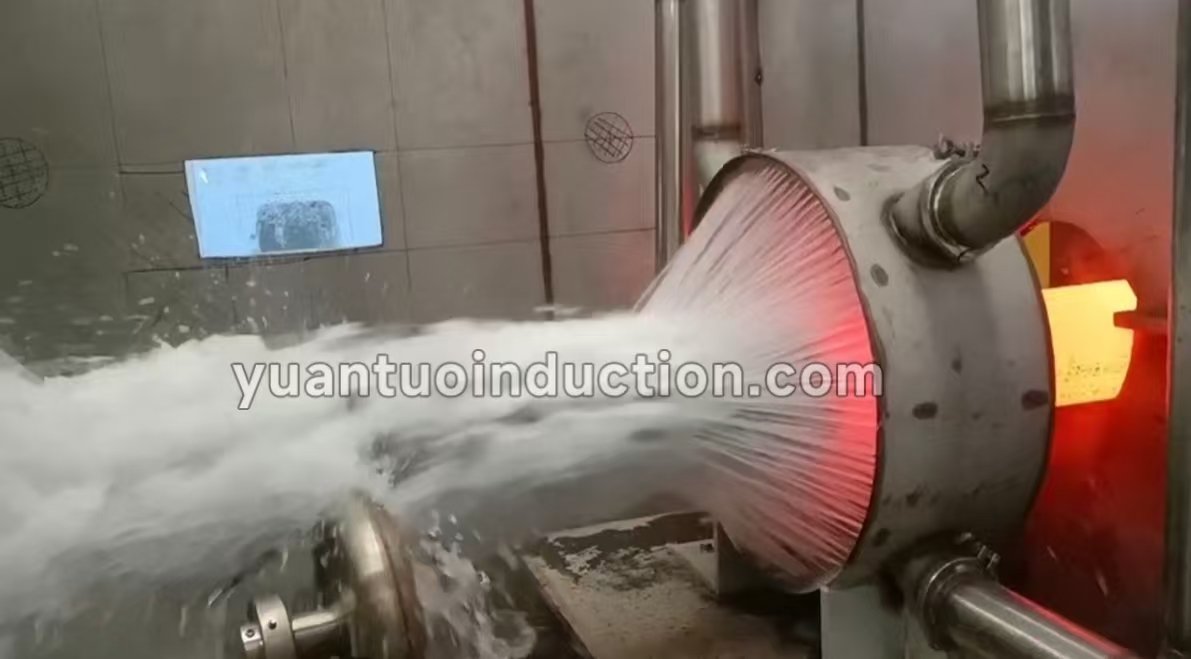
Hebei Yuantuo provides induction heating and quenching solutions for steel pipes, tubes and casing-type workpieces. The equipment can be designed with stable conveying, multi-zone induction heating, infrared temperature detection and controlled spray quenching. For pipe heat treatment projects, Yuantuo engineers evaluate outer diameter, wall thickness, pipe length, steel grade, quenching temperature and production speed before designing the line.
To reduce pipe bending after quenching, the production line should not only focus on heating power. It should also coordinate heating uniformity, pipe rotation, spray distribution, water flow, cooling rhythm and tempering stability.
If you are planning a steel pipe quenching and tempering line, please provide pipe OD, wall thickness, length, material grade, target temperature and required capacity. Yuantuo can help evaluate a suitable induction heat treatment solution.
