
In actual steel bar heat treatment production, one common problem is:
Steel bars from the same production batch show different hardness values after quenching.
Typical situations include:
The first reaction is often:
“Is the quenching water flow insufficient?”
or:
“Is the cooling process unstable?”
The cooling system certainly affects the final properties.
However, based on practical continuous induction heat treatment projects, hardness variation is not always caused only by the cooling stage.
In many cases, the problem may already exist in earlier stages:
Heating → Temperature Holding → Material Movement → Temperature Monitoring
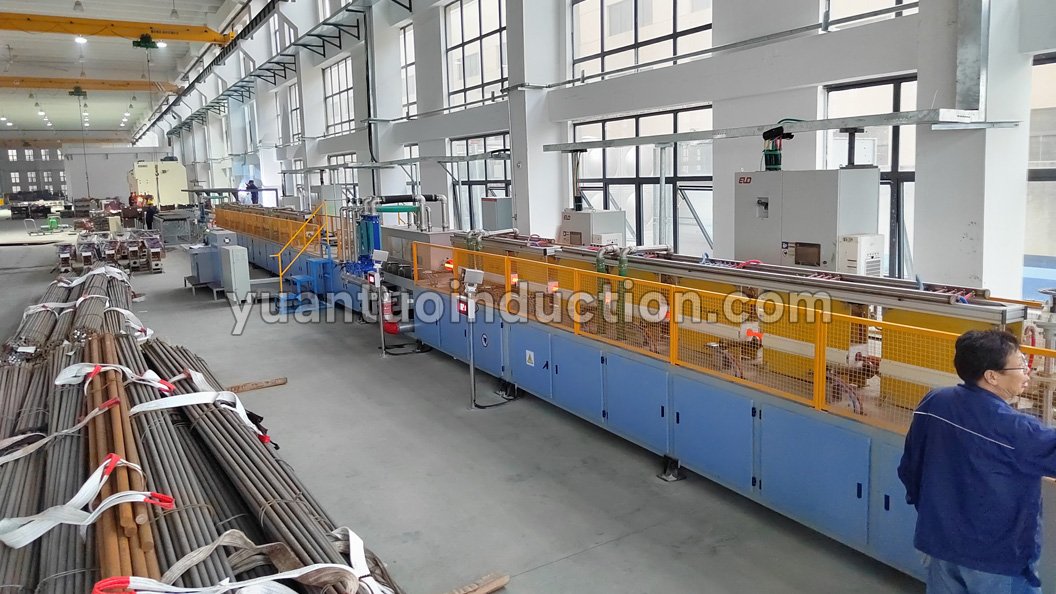
Before quenching, steel bars need to complete the required austenitizing process.
In simple terms:
The steel bar must reach the correct thermal condition before rapid cooling.
If the heating process has problems such as:
then even with identical quenching parameters, the final hardness can still vary.
This is especially important in continuous production.
One steel bar reaching the target temperature does not mean every steel bar will have the same thermal condition.
Therefore, a steel bar heat treatment line should not only consider:
“What is the outlet temperature?”
It should also consider:
“Can every steel bar pass through the heating section with stable and repeatable temperature conditions?”
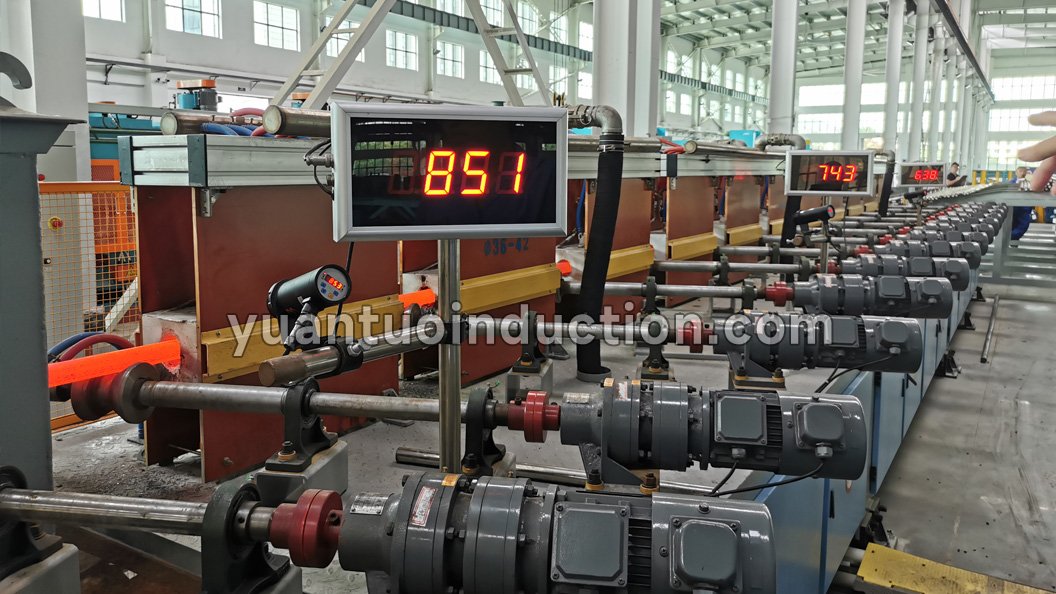
Induction heating is not simply about increasing power.
Different steel bar diameters and materials require different combinations of:
For example:
Small diameter bars usually require attention to:
Larger diameter bars require more consideration of:
If the frequency is not correctly selected, a possible situation is:
The result may be:
The surface hardness appears acceptable, but the overall performance is unstable.
Many customers focus mainly on:
However, they may overlook another important factor:
How does the steel bar move through the heating system at high temperature?
During continuous steel bar heat treatment, it is important to control:
If the steel bar moves with:
the heating condition may become inconsistent.
For long steel bars, the mechanical conveying system is as important as the induction heating system itself.
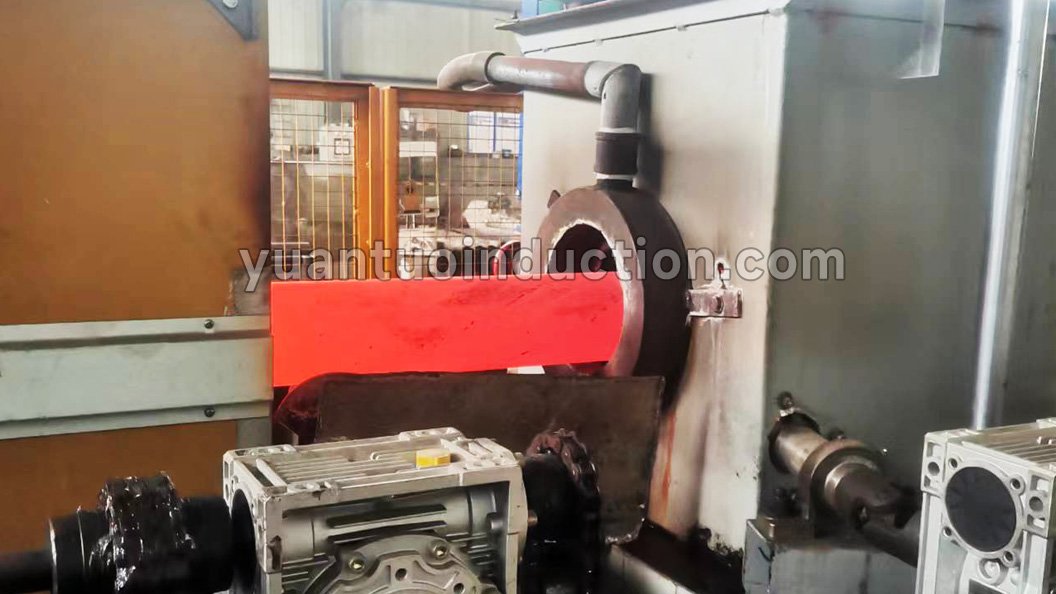
In some traditional production processes, manufacturers check the temperature of several randomly selected steel bars and use this data to evaluate the whole process.
However, continuous production is different.
Because:
A more reliable method is:
Online temperature measurement + automatic process control
For example:
The system continuously monitors outlet temperature and adjusts:
This improves:
Of course, quenching cooling remains an important factor.
Engineers need to evaluate:
However:
If the steel bar temperature is already unstable before entering the quenching section, simply adjusting cooling parameters may not fully solve the problem.
A practical troubleshooting sequence should be:
This provides a more complete understanding of the real cause.
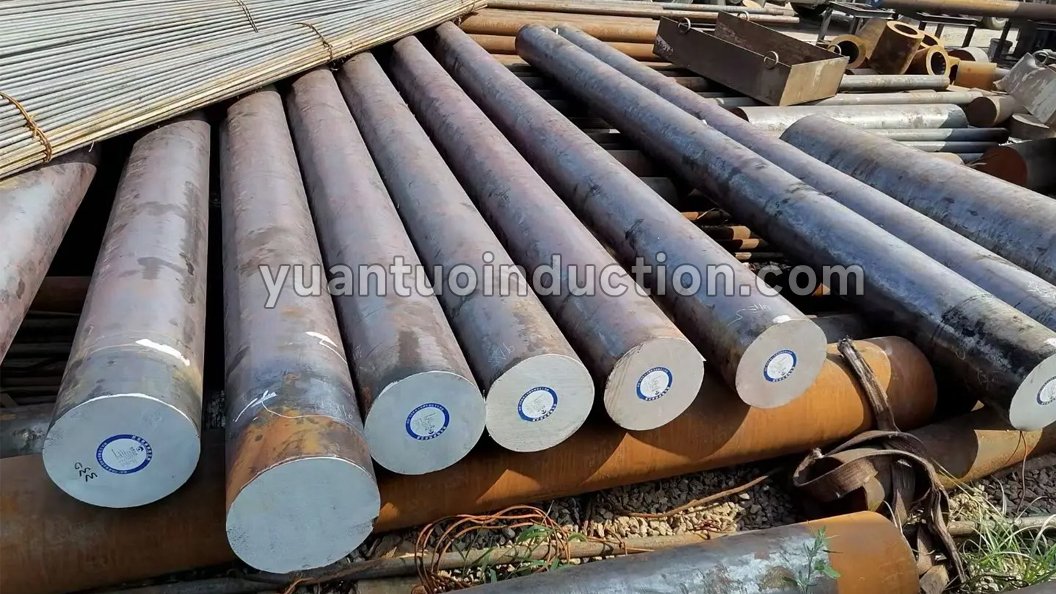
For continuous steel bar quenching and tempering projects, the equipment design needs to consider:
Including:
Including:

Including:
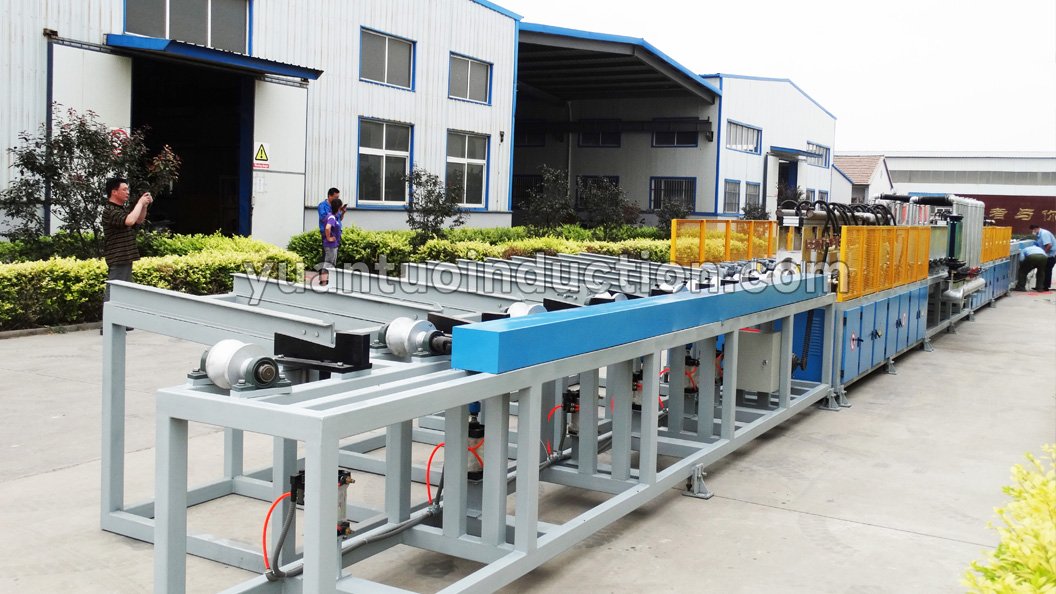
Including:
The final goal is not:
“Heat the steel bar to a certain temperature.”
The real objective is:
“Ensure every steel bar receives stable and repeatable heat treatment performance during continuous production.”
For an accurate engineering evaluation, customers should provide:
| Parameter | Required Information |
|---|---|
| Steel Bar Diameter | Minimum and maximum range |
| Length | Single bar length |
| Material | 45#, 40Cr, 42CrMo, etc. |
| Process | Quenching, tempering, surface hardening |
| Target Hardness | HRC requirement |
| Production Capacity | t/h or bars/hour |
| Operation Mode | Continuous or batch |
| Quality Requirements | Hardness uniformity and mechanical properties |
No.
Cooling parameters affect the final result, but heating uniformity, frequency selection, conveying stability and material conditions are also important factors.
Because frequency determines current distribution and heating depth. It must be selected according to bar diameter, material and heat treatment objectives.
Because occasional measurements cannot represent long-term production stability. Online monitoring helps maintain consistent process conditions.
Rotating movement improves circumferential heating uniformity and helps maintain stable conditions during continuous induction heating.
Stable hardness after steel bar quenching is not determined only by the cooling system.
For continuous steel bar heat treatment projects, the complete process should be evaluated together:
Material Grade + Bar Size + Heating Method + Frequency Selection + Conveying Stability + Temperature Control + Cooling Process
Hebei Yuantuo Electromechanical designs customized induction heat treatment systems according to actual customer requirements, helping steel manufacturers achieve stable, continuous and repeatable production performance.
WhatsApp:+86 15226757228
Email:yuantuo38@gmail.com
Website:www.yuantuoinduction.com
