
Unlike batch heating processes, steel bars in a continuous induction heat treatment line move through each production stage without interruption.
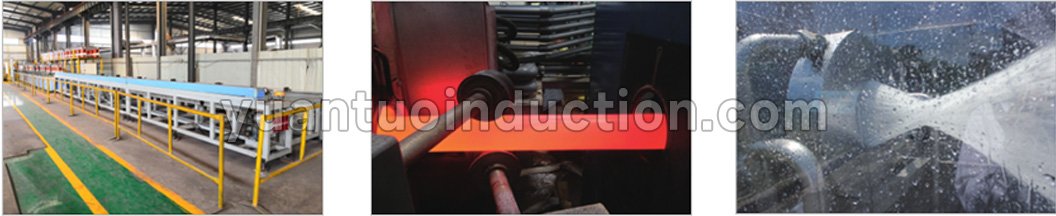
As the workpiece travels through the heating, quenching and tempering sections, conveyor speed directly determines how long it remains in each process zone.
A properly coordinated conveying rhythm helps maintain stable production while supporting consistent heat treatment quality.
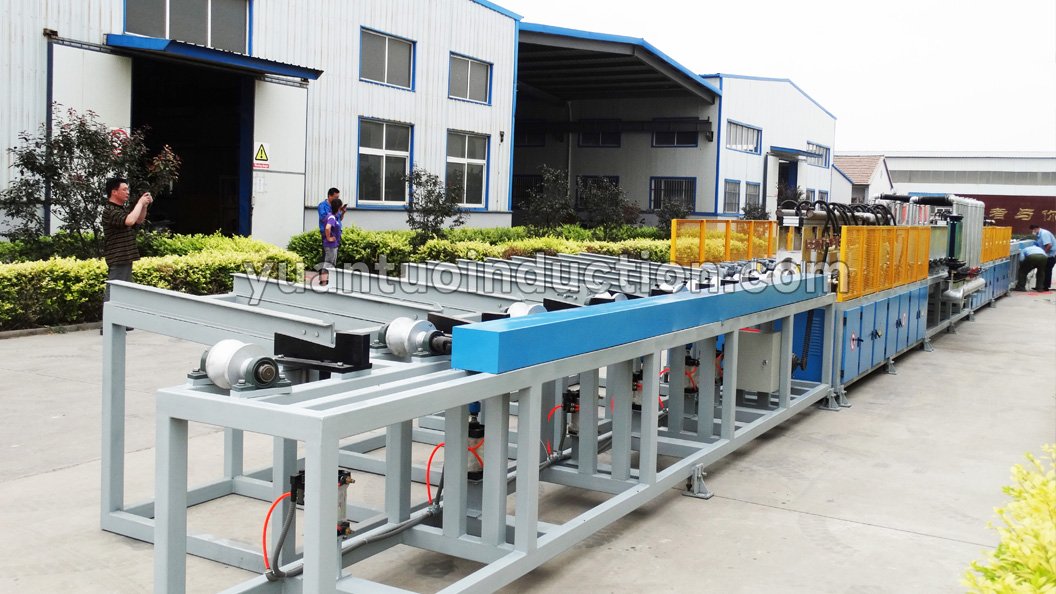
During continuous production, conveyor speed affects several process parameters, including:
Since these parameters influence one another, conveyor speed should be evaluated as part of the complete production process rather than adjusted independently.
Not necessarily.
If the conveyor moves too quickly, the workpiece may not remain in the heating zone long enough to reach the required process temperature.
If the conveyor moves too slowly, the workpiece may remain at elevated temperatures longer than necessary, affecting process stability and production efficiency.
For this reason, conveyor speed is normally determined according to:
rather than production speed alone.
Stable continuous production is generally achieved through coordinated control of several process variables, including:
When these systems operate together, production rhythm becomes more stable and heat treatment consistency is easier to maintain.
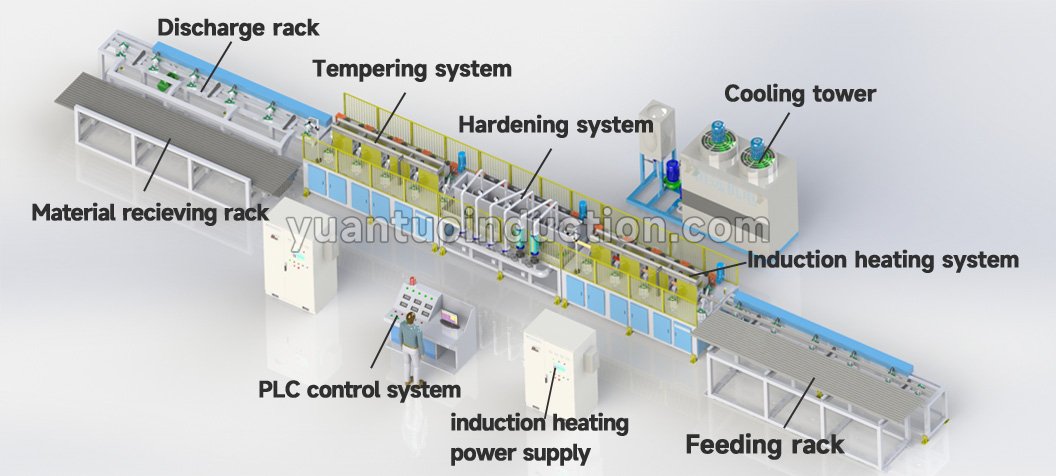
Automatic Loading → Continuous Conveying → Induction Heating → Infrared Temperature Measurement → Automatic Power Adjustment → Spray Quenching → Tempering (According to Process Requirements) → Cooling → Automatic Unloading
Several common issues are encountered during process optimization:
❌ Increasing conveyor speed only to maximize production output.
❌ Changing conveying speed without adjusting heating parameters.
❌ Applying the same conveying rhythm to different workpiece sizes.
❌ Ignoring temperature feedback during production.
A stable process depends on coordinated adjustment of all production parameters rather than changing only one setting.
During commissioning and production optimization, engineers generally evaluate:
Optimizing these parameters together helps improve process stability and maintain consistent heat treatment quality.
The required conveying speed depends on multiple production conditions, including:
Because these factors vary from one project to another, continuous induction heat treatment lines are generally designed as customized production systems instead of using fixed conveying parameters.
Matching conveyor speed with the overall process helps achieve stable production and consistent product quality.
Before requesting a quotation, prepare the following information:
✔ Workpiece dimensions
✔ Workpiece length
✔ Steel grade
✔ Heat treatment process
✔ Required production capacity
✔ Continuous production requirements
✔ Automation requirements
Yes.
The conveying system is normally configured according to the process requirements of each project. The available adjustment range depends on the production line design.
Yes.
Conveyor speed determines how long the workpiece remains inside the heating zone, making it one of the important factors influencing temperature distribution.
In most applications, conveying speed is adjusted according to workpiece dimensions, steel grade and process requirements to maintain stable heat treatment conditions.
Stable production generally depends on coordinated optimization of conveyor speed, heating parameters, temperature monitoring and process control rather than adjusting a single parameter.
How to Reduce Oxidation During Induction Heating
How Infrared Temperature Measurement Improves Continuous Heat Treatment
Conveyor speed is not simply a production setting. It is closely related to heating time, temperature control and overall process stability.
Providing information such as workpiece dimensions, steel grade, production capacity and heat treatment requirements allows engineers to evaluate the production rhythm and develop a customized continuous induction heating solution that better matches the manufacturing process.
