
In modern steel production, billet reheating plays a critical role in determining energy efficiency, product quality, and production stability.
Traditional gas-fired reheating furnaces have long been used in rolling mills. However, with rising energy costs and stricter environmental requirements, more steel plants are now shifting to induction billet heating furnace technology.
This article explains the key differences and why induction heating is becoming the preferred solution.
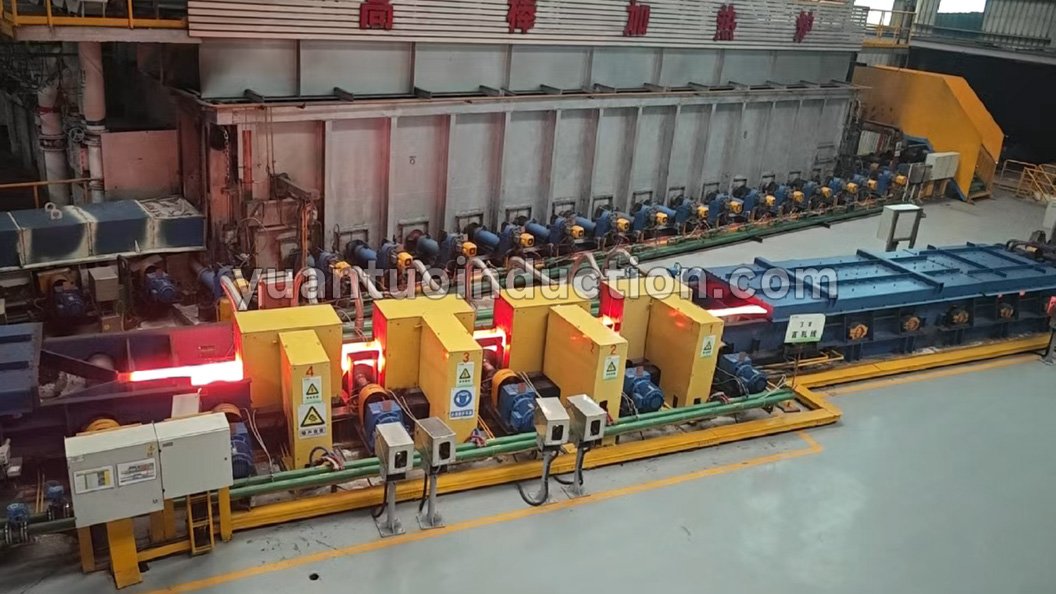
In conventional processes:
👉 These issues directly increase production cost and reduce yield.
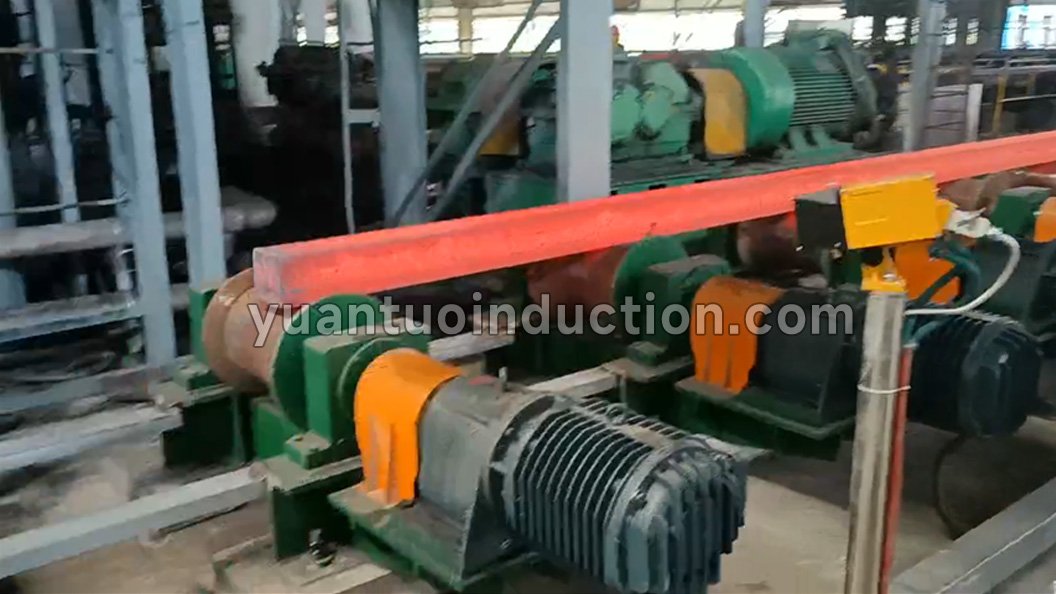
An induction billet heating furnace is an advanced system that uses electromagnetic induction to heat billets internally.
Instead of external combustion, it generates eddy currents inside the billet, allowing rapid and uniform heating.
It is widely used as:
| Item | Induction Heating | Gas Furnace |
|---|---|---|
| Heating Method | Internal (eddy current) | External combustion |
| Energy Efficiency | High (65–75%) | Low (25–30%) |
| Heating Speed | Fast | Slow |
| Oxidation Loss | ~0.5% | 1.5–2% |
| Temperature Control | Precise | Less accurate |
| Environmental Impact | No emissions | High emissions |
Billets from continuous casting already have high temperature (~800°C).
Induction systems only need to increase temperature by 300–400°C, instead of full reheating.
Unlike traditional billet reheating furnaces, induction systems:
Induction heating directly converts electrical energy into heat inside the billet, minimizing heat loss.
Induction billet heating systems are ideal if:
Switching from traditional gas furnaces to an induction billet heating furnace is not just a technological upgrade—it is a strategic move toward:
👉 Looking for an energy-saving billet reheating solution?
Contact us today to get a customized induction heating system for your rolling line.
