
| Item | Specification |
|---|---|
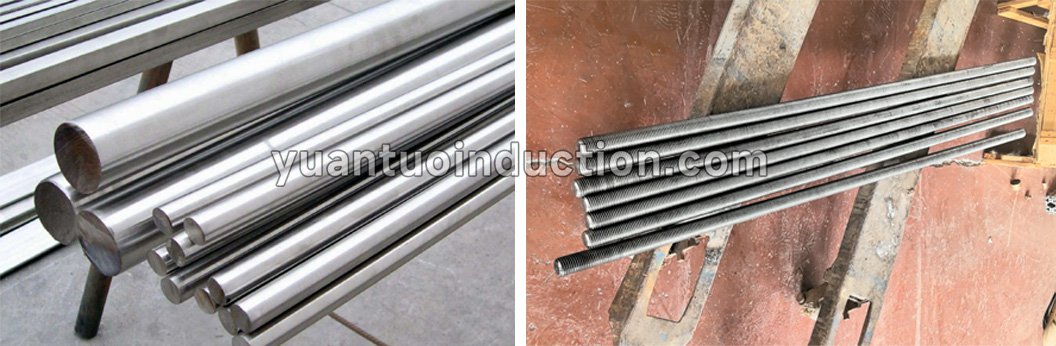
| Workpiece | Steel Bars / Round Bars |
| Heat Treatment Diameter | 12–150 mm |
| Forging Heating Diameter | 22–400 mm |
| Heating Method | Medium Frequency Induction Heating |
| Equipment Type | Customized Continuous Production Line |
This induction heating solution is suitable for various steel bar applications, including:
Although these workpieces have similar shapes, differences in diameter, material grade and heat treatment requirements often require different induction heating parameters.
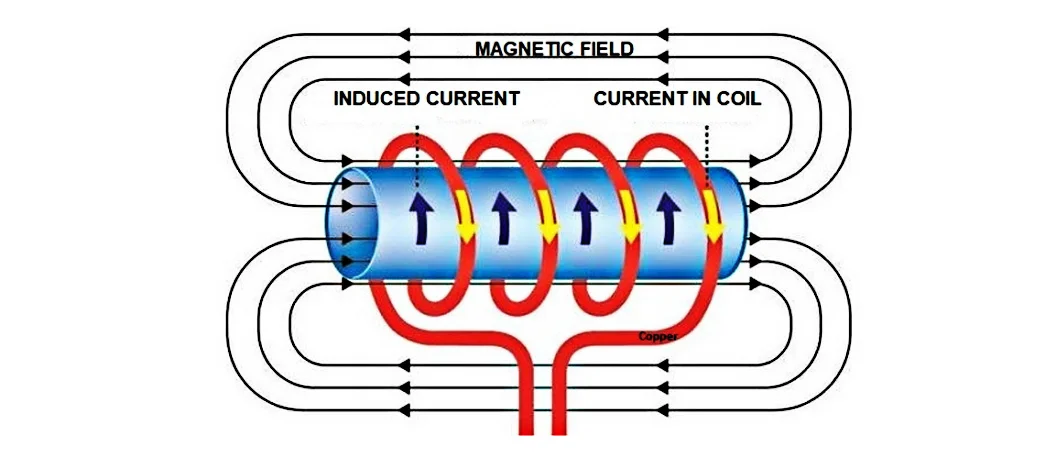
Induction frequency is one of the key parameters in an induction heating system.
It influences not only heating speed but also how heat is distributed throughout the workpiece.
For continuous steel bar heat treatment lines, selecting an appropriate frequency helps achieve stable heating performance, consistent product quality and improved production efficiency.
Frequency should always be selected according to the application rather than as an isolated parameter.
A properly selected frequency contributes to:
These factors work together to determine the overall performance of the heat treatment process.
Steel bars with different diameters require different heating characteristics.
As the diameter changes, the amount of heat required and the desired heating depth also change.
When designing an induction heating system, engineers typically evaluate:
The frequency is then selected as part of the complete engineering solution.
Not necessarily.
A higher frequency is not automatically the best choice for every application.
Likewise, selecting a lower frequency simply to increase heating depth may not produce the desired results.
The objective is to achieve the best balance between heating efficiency, temperature distribution and production requirements.
Engineering decisions are based on process matching rather than maximizing a single parameter.
Modern continuous induction heating systems typically combine several technologies to maintain stable heating conditions:
These technologies help improve process consistency throughout continuous production.

Loading→Induction Heating→Infrared Temperature Measurement→Automatic Power Adjustment→Spray Quenching→Tempering (Optional)→Cooling→Automatic Unloading
When selecting induction heating equipment, several common misunderstandings should be avoided:
❌ Assuming that a higher frequency always provides better heating results.
❌ Focusing only on power capacity while ignoring frequency selection.
❌ Requesting equipment recommendations without providing workpiece dimensions or steel grade.
❌ Expecting one frequency setting to be suitable for every product size.
In practice, frequency should always be determined together with the workpiece characteristics and process requirements.
To improve the accuracy of equipment selection, it is recommended to prepare the following information before discussing a project:
Providing complete technical information enables engineers to optimize frequency selection, induction coil design and power configuration.
Every heat treatment project has unique technical requirements.
Steel bar diameter, material properties, production speed and required heating temperature all influence frequency selection and equipment configuration.
For this reason, continuous induction heat treatment lines are generally designed as customized engineering solutions rather than standardized machines.
A customized solution helps achieve more stable temperature control, higher production efficiency and better long-term operating performance.
Before requesting a quotation, prepare the following information:
✔ Steel bar diameter
✔ Steel bar length
✔ Steel grade
✔ Heat treatment process
✔ Target heating temperature
✔ Production capacity
✔ Workshop power supply
✔ Required automation level
No.
The appropriate frequency depends on the workpiece dimensions, steel grade and heat treatment process.
Yes.
Within an appropriate diameter range, engineers can optimize induction coils and process parameters to accommodate different product sizes.
Yes.
Frequency is one of the important factors influencing heat distribution and temperature consistency during induction heating.
Providing information such as workpiece dimensions, steel grade, production capacity and required heat treatment process allows engineers to recommend a more suitable solution.
Previous Article
How to Select an Induction Heating System Based on Steel Bar Diameter
Next Article
How to Improve Temperature Uniformity in Continuous Induction Heating
Related Products
Selecting the right induction heating frequency requires evaluating multiple process parameters rather than focusing on a single specification.
If you are planning a new heat treatment project, preparing information such as workpiece dimensions, steel grade, production capacity and required process will help engineers develop a more suitable customized induction heating solution.
