
In a continuous induction heat treatment line, steel bars move continuously through the heating process.
During production, actual heating conditions may vary due to factors such as:
As a result, power settings alone cannot fully represent the actual temperature of the workpiece.
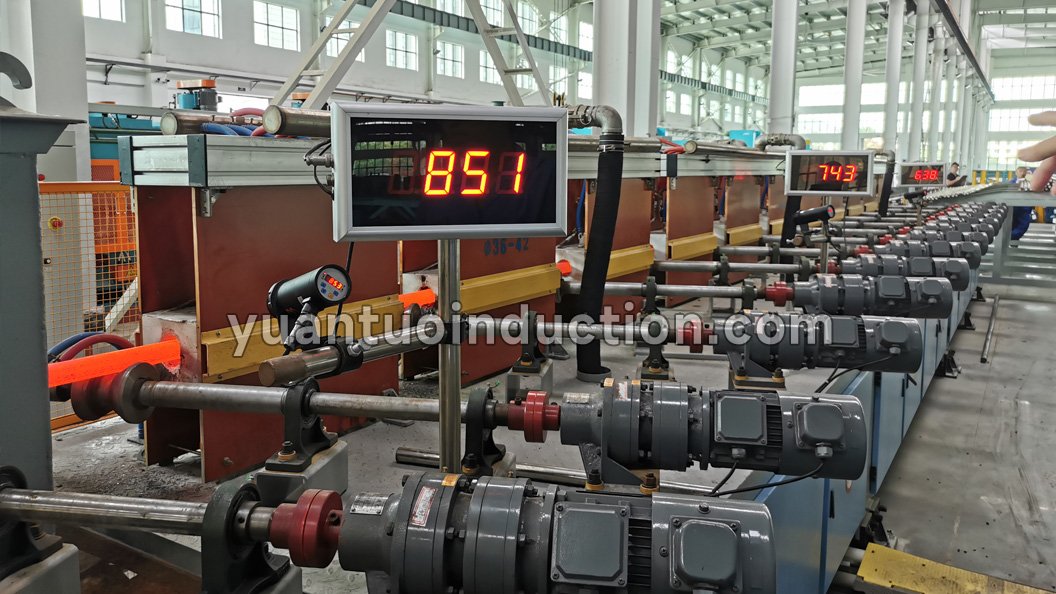
Real-time temperature monitoring provides direct process feedback, helping operators and control systems better understand the actual heating condition.
Infrared temperature measurement is commonly used to:
Continuous temperature monitoring helps improve visibility throughout the production process.
Power output is only one of the variables influencing induction heating.
Actual workpiece temperature may also be affected by:
For this reason, identical power settings do not always produce identical heating results.
Real-time temperature feedback provides a more accurate representation of actual production conditions.
Modern continuous induction heat treatment lines typically combine:
Based on temperature feedback, the control system manages the heating process according to the selected production strategy.
This coordinated approach helps improve production repeatability and process consistency.
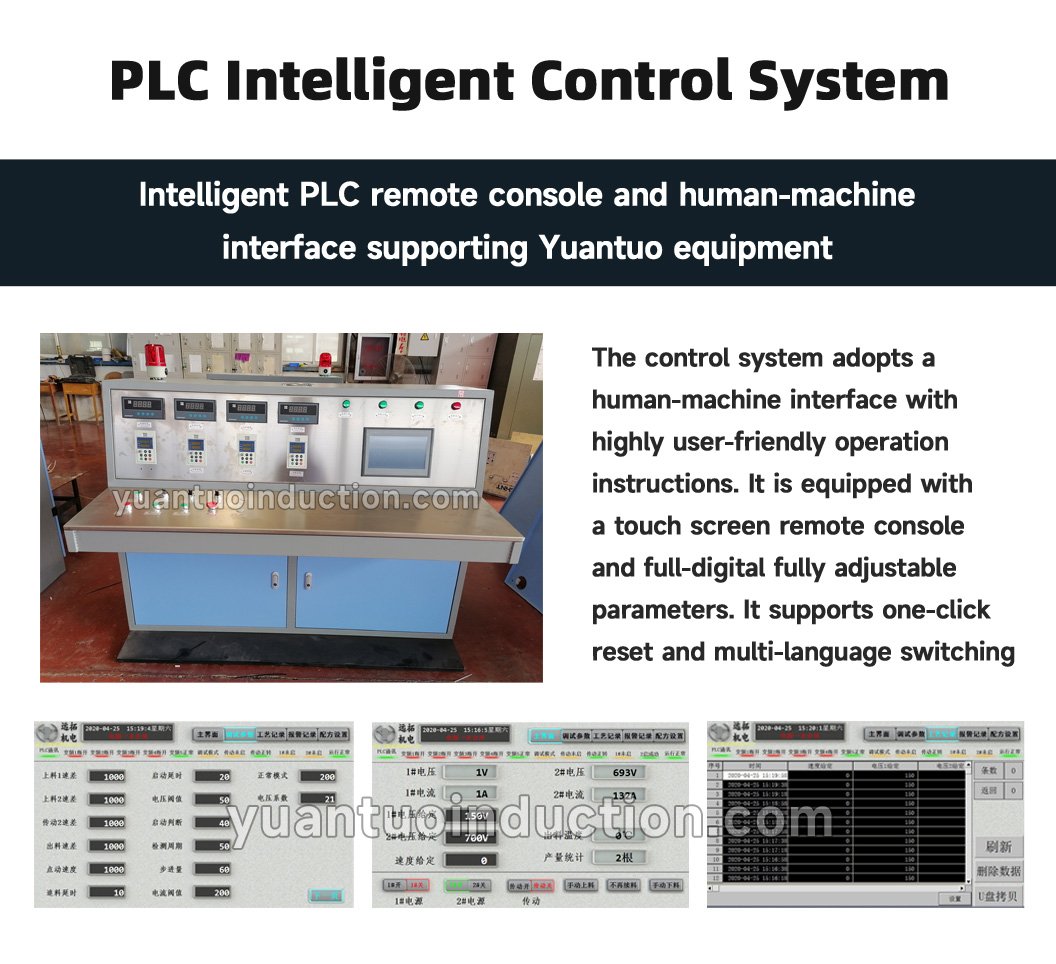
Continuous temperature monitoring helps operators to:
As production volumes increase, process data becomes increasingly valuable for maintaining stable manufacturing quality.
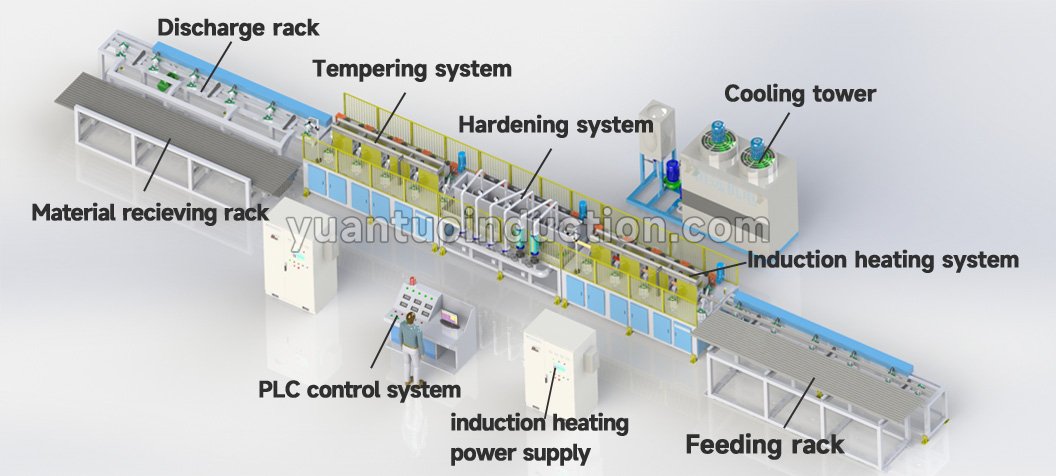
Automatic Loading → Induction Heating → Infrared Temperature Measurement → PLC Data Feedback → Automatic Power Adjustment → Spray Quenching → Tempering (According to Process Requirements) → Cooling → Automatic Unloading
Several common misunderstandings can reduce process stability:
❌ Focusing only on heating power instead of actual workpiece temperature.
❌ Assuming stable equipment operation guarantees stable product temperature.
❌ Relying entirely on operator experience to judge heating conditions.
❌ Overlooking the importance of production data recording.
Effective process control depends on real-time information rather than assumptions.
During continuous heat treatment, engineers generally recommend monitoring:
Reviewing these parameters together helps improve long-term production stability.
Different steel bar sizes, steel grades and heat treatment objectives require different temperature control strategies.
Therefore, continuous induction heat treatment lines are typically engineered according to:
A customized control strategy helps improve process consistency and supports stable long-term operation.
Before requesting a quotation, prepare:
✔ Workpiece dimensions
✔ Steel grade
✔ Heat treatment process
✔ Required temperature
✔ Production capacity
✔ Automation requirements
✔ Production data recording requirements
Yes.
Infrared temperature monitoring is widely used in continuous heat treatment lines because it provides real-time information without interrupting production.
Actual heating results are influenced by several factors, including material grade, workpiece dimensions and conveyor speed.
Therefore, direct temperature measurement provides more reliable process information.
Depending on the control system configuration, temperature data and process information can be recorded for production management and process analysis.
Real-time monitoring helps identify temperature variation during production, making process adjustment more effective and improving consistency.
Previous Article
How Conveyor Speed Affects Continuous Steel Bar Heat Treatment
Next Article
How PLC Control Improves Automation in Induction Heat Treatment Lines
Related Products
Temperature control in continuous induction heat treatment involves more than selecting a power level. Workpiece dimensions, material characteristics, production rhythm and monitoring strategy all contribute to overall process performance.
Providing complete production information helps engineers evaluate the process requirements and develop a customized induction heating solution suited to your manufacturing application.
